Showing 3

Titanium flat, touring and gravel handlebars, shaped and sized to your fit.
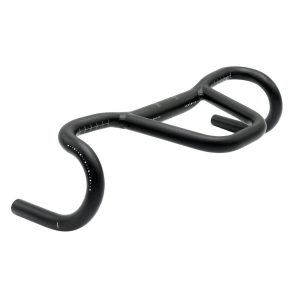
The Kitchen Sink Handlebar’s flared drops and loop design give a gravel rider more hand positions than a standard road-shaped bar, which matters over a long mixed-surface day, and the loop at the front doubles as real mounting space for a bag, light or computer without crowding the stem. It’s built for riders who want drop-bar control with more room to move than a road bar allows.
A wider, straighter flat bar gives more leverage and control on technical singletrack, where quick, precise steering input matters more than aerodynamics. The titanium MTB handlebar takes the edge off trail chatter the same way a titanium frame does, absorbing high-frequency vibration through the material itself rather than through the rider’s hands and wrists.
Multi-day riders want a bar built for hours in the saddle and for carrying gear, and the touring handlebar’s shape is set up for exactly that: a more relaxed reach and multiple comfortable hand positions for long days, plus enough usable space at the front for a bar bag. The Kitchen Sink bar’s loop is also a common bikepacking pick for the same reason, extra real estate for gear without adding a separate mount.
Most handlebars are sold as a standard aluminium or carbon shape in a handful of fixed widths, chosen by trial and error rather than an actual fit process. Specialist bikepacking and gravel bar shapes exist in the market, sold as an aftermarket upgrade, but rarely matched to the rest of a custom geometry. Auren specs handlebar shape and width as part of the same fit process that sets the rest of the bike, titanium as standard, so the bar suits your riding position rather than the other way around.
From your shoulder width and riding position, set during the same fit process that determines the rest of your geometry.
It’s a flared drop bar with a front loop, built for gravel and bikepacking riders who want more hand positions and extra room to mount a bag, light or computer than a standard drop bar allows.
Titanium absorbs vibration the way carbon does, without carbon’s risk of an invisible crack after an impact, and without aluminium’s tendency to fatigue over years of hard use.
{confirm with Will} for exact clamp diameter compatibility. It’s specced to match your chosen stem during the build.
Not as a titanium option yet, road builds currently run a standard alloy or carbon drop bar. {confirm with Will} if this has changed.
Handlebars run $195 for the Kitchen Sink bar to $360 for the MTB and Touring handlebars. {confirm with Will} for an exact price against your build.
Yes, a handlebar can be bought separately or added to an existing Auren bike, though width and shape are specced most accurately alongside a fit.
The loop at the front doubles as real mounting space for a bag, light or computer, without crowding the stem, useful for gravel and bikepacking setups.
A flat bar gives more leverage and quicker steering input on technical singletrack, which is why Auren’s MTB handlebar is a flat design rather than a drop bar.
Yes, it absorbs high-frequency vibration through natural material flex, without giving up the stiffness needed for confident steering.
No, titanium doesn’t develop the hidden fractures a hard impact can cause in carbon, and it doesn’t fatigue at weld points the way aluminium can over years of hard riding.
Yes. Fit refinements, including a handlebar swap, are part of Auren’s local after-sales support rather than something you’d have to source separately.
Frame or full bike, every build starts the same way: designed around you. If you're weighing up where you ride most, start here.
From spec decisions to the fine print, everything you need before locking in your frame.