Showing 3

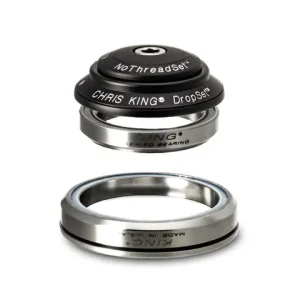
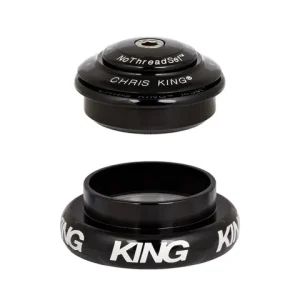
Integrated and semi-integrated headsets, including Chris King, matched to your custom titanium frame and fork.
A headset’s job doesn’t change with how you ride — it’s set by your frame and fork’s head tube standard, not by whether you’re riding gravel, road, mountain or loaded touring. Most modern titanium and carbon builds run a tapered 1-1/8″ to 1.5″ steerer with an integrated or semi-integrated headset, matched to your frame automatically as part of the build. What does vary is how much load and weather it needs to shrug off over the years — which is why every Auren headset runs sealed cartridge bearings, with Chris King available as the upgrade for riders who want the tightest tolerances and longest service life a headset can offer.
Headsets are mostly sold as a commodity, a cheap sealed-bearing unit bundled into a full bike or bought separately for $20–$40 and rarely thought about again until it starts creaking. At the other end, brands like Chris King sell a genuinely better-engineered part on its own reputation, at a price that only makes sense once you understand what you’re paying for. Auren specs the right standard for your frame and fork as part of the build, so the headset question gets answered once, correctly, rather than left for you to work out at a bike shop counter later.
Most builds run a tapered 1-1/8″–1.5″ steerer with an integrated or semi-integrated headset, matched to your specific frame and fork during the build.
No. It’s specced automatically to match your frame and fork’s exact standard, unless you want to upgrade to a Chris King headset, which is worth discussing with Will directly.
Both use sealed cartridge bearings, but Chris King’s tolerances and bearing quality are a step up, and the difference shows up as years pass rather than on day one. It’s a small upgrade cost relative to the whole build.
A well-sealed headset, serviced occasionally, lasts many years. {confirm with Will} for a specific service interval recommendation.
Yes, as long as the replacement matches the original standard. Keeping a record of your bike’s exact headset spec makes that a straightforward swap down the track.
An integrated headset sits its bearings fully inside the head tube; semi-integrated sits them partly inside, with a cup pressed into the frame. Auren specs whichever standard matches your frame’s design.
Because it carries every load the front end takes, steering, braking, impacts, through two small bearings. It’s easy to overlook and one of the last places worth cutting corners.
If you want the tightest tolerances and the longest service life available, yes. It’s a small cost relative to the whole build for a part that quietly does its job for decades.
{confirm with Will}, since it depends on whether your existing headset’s standard matches an available Chris King unit.
Sealed cartridge bearings need less attention than older designs, but an occasional check keeps water and grit from creeping in. {confirm with Will} for a specific service interval recommendation.
No. It’s matched to your frame and fork’s exact head tube and steerer during the build, not chosen separately or guessed at afterwards.
It’s usually the first sign of a cheap or worn headset losing its seal. That’s uncommon on a sealed cartridge design, but worth having checked if it happens.
Frame or full bike, every build starts the same way: designed around you. If you're weighing up where you ride most, start here.
From spec decisions to the fine print, everything you need before locking in your frame.