 Written by Will · Auren, Founder and Engineer
A car-style transmission,
built into your bike.
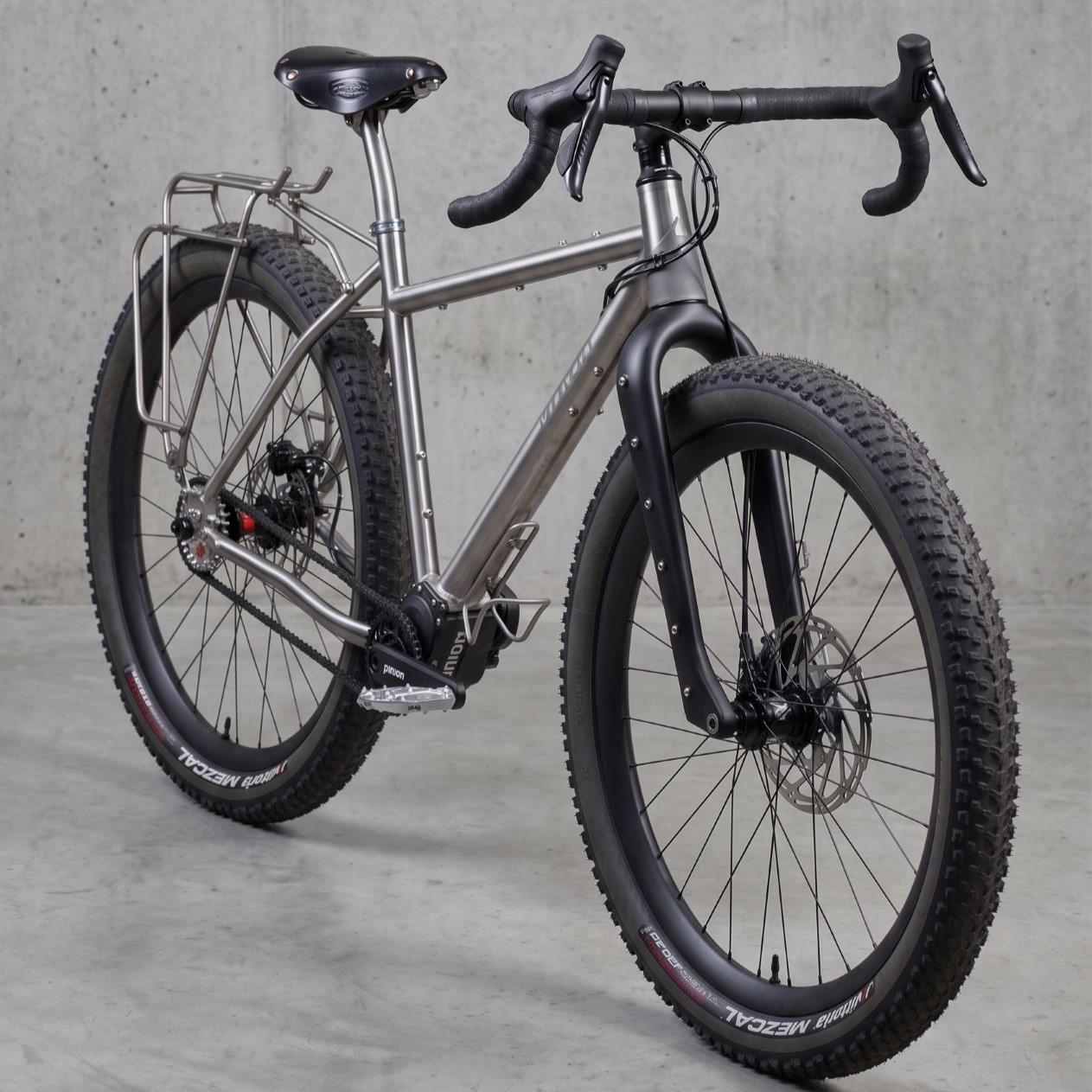
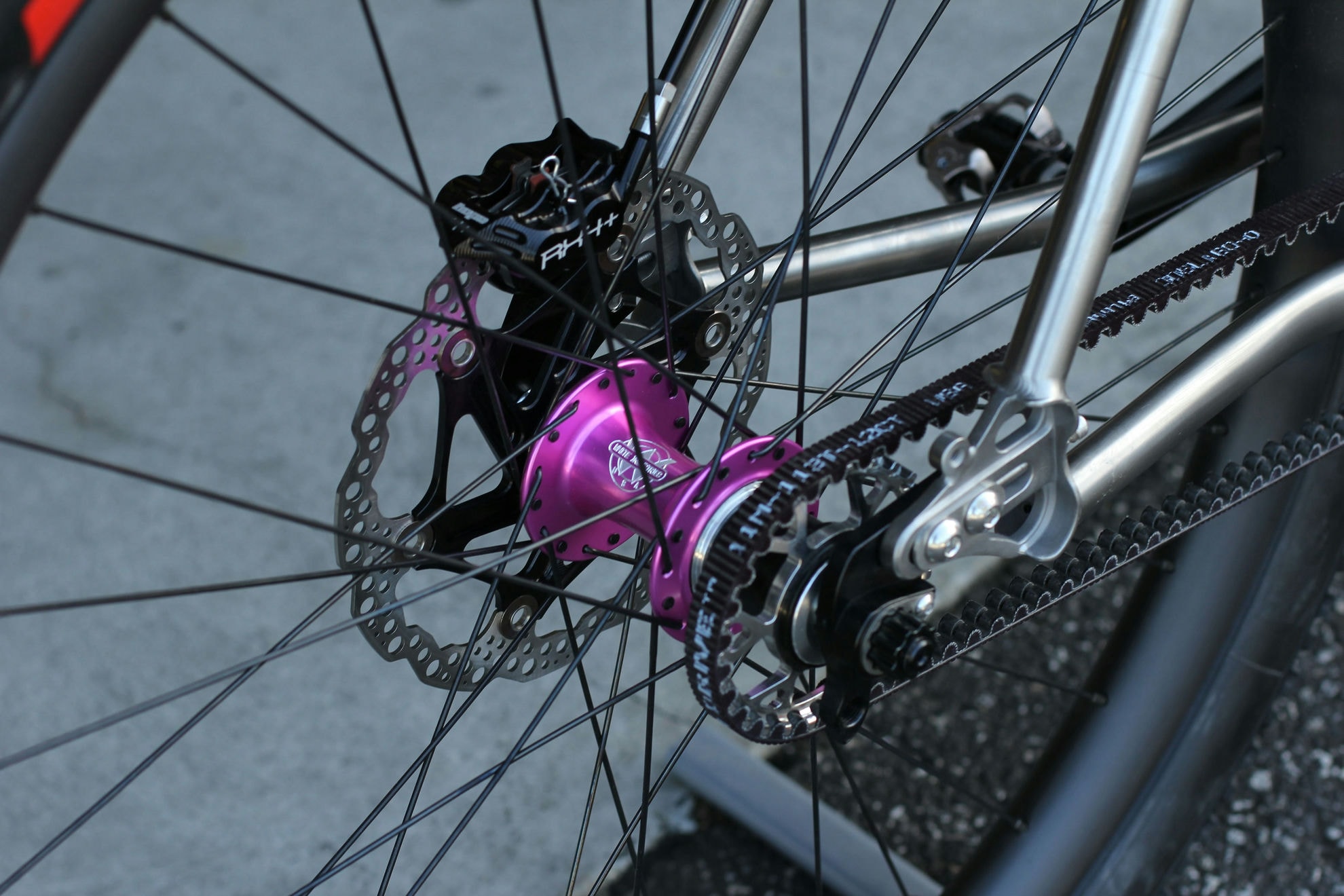
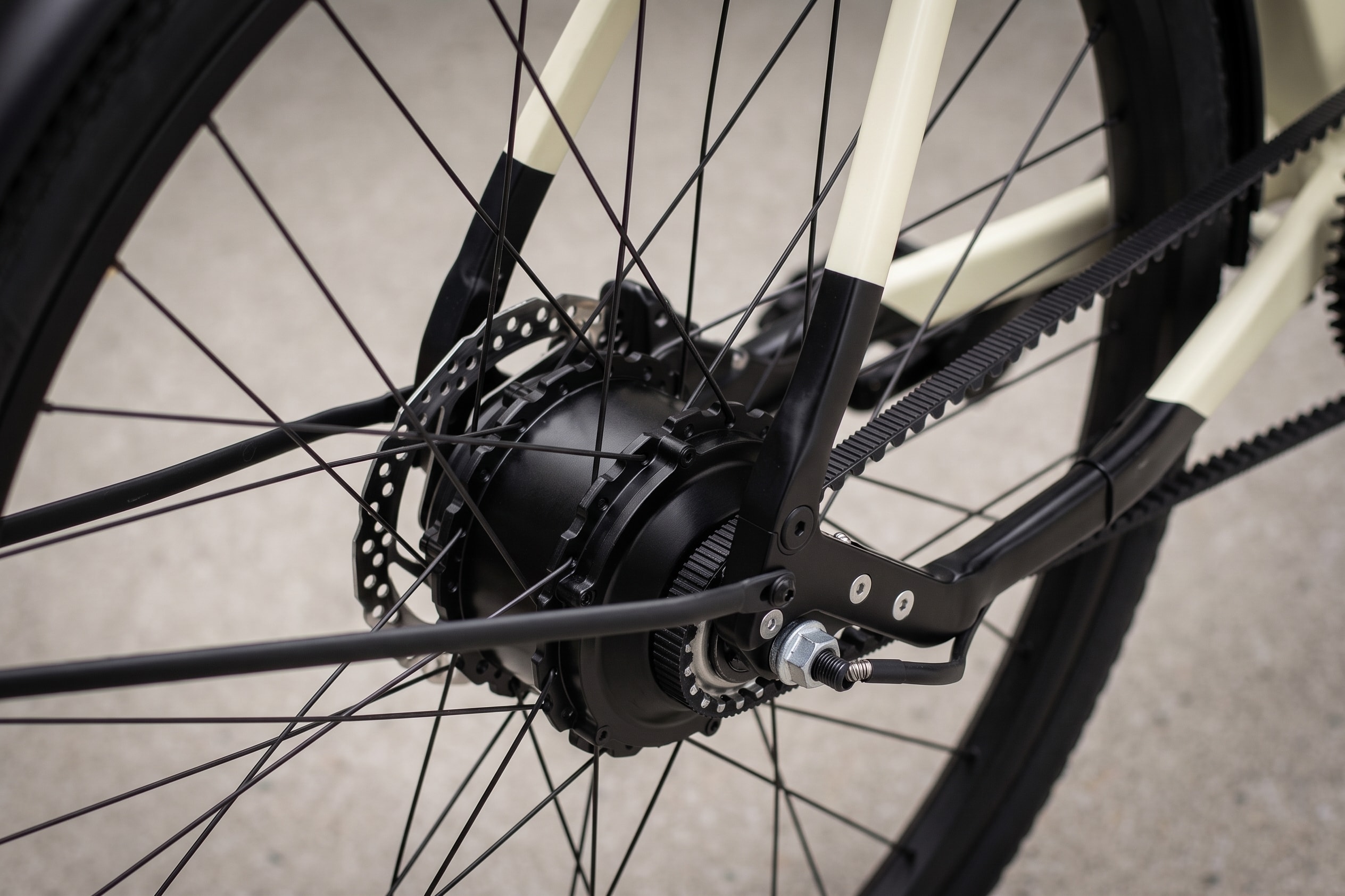
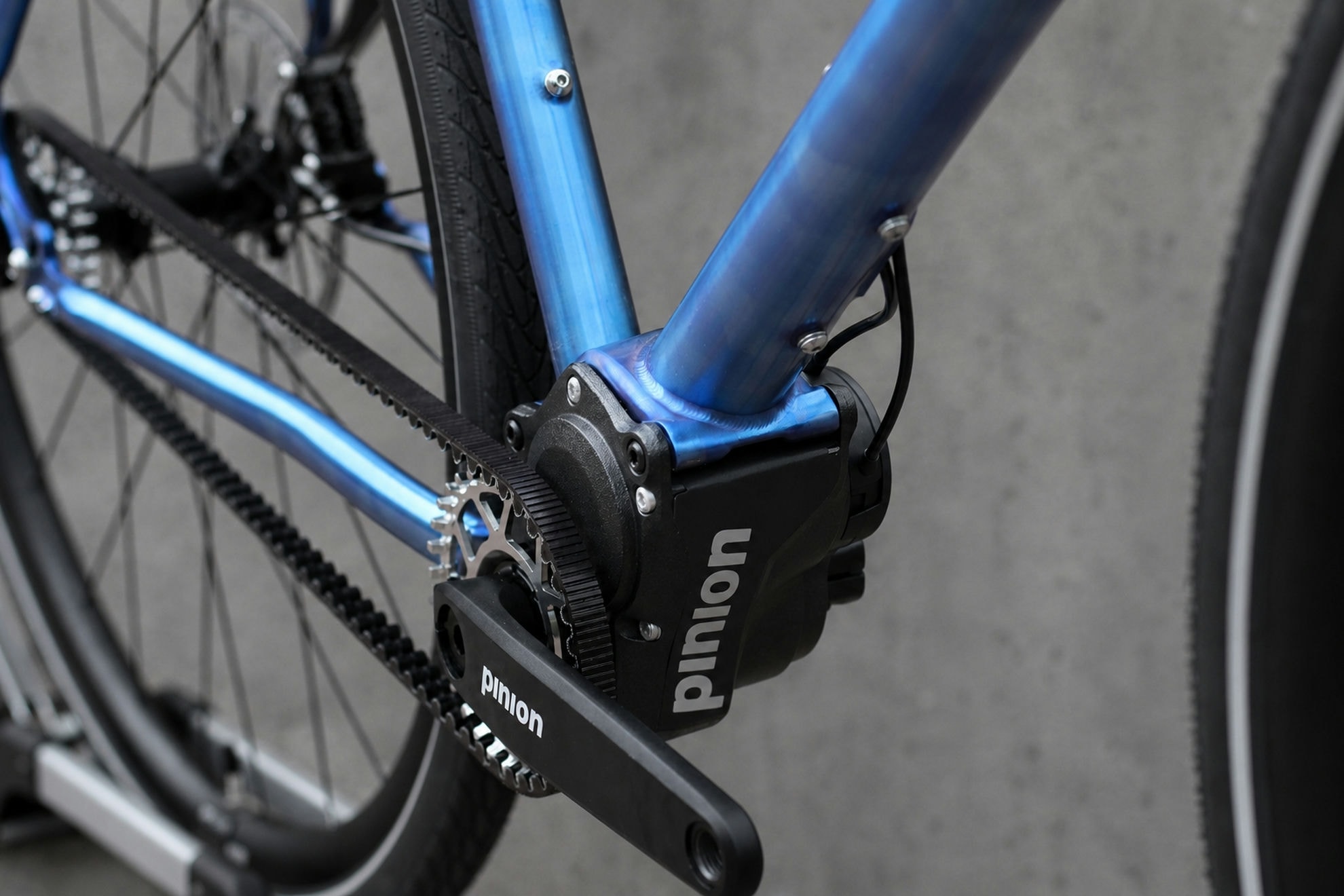
A Pinion gearbox is a sealed transmission mounted at the bottom bracket, the centre of the bike, where the cranks attach. Instead of a cassette and a derailleur shifting a chain across sprockets at the rear wheel, all the gears live inside one enclosed unit, modelled on automotive transmission design. Power runs through just two sets of cogs at any moment, and the whole system is sealed against water, grit and impact. A single sprocket drives the rear wheel via a chain, or more commonly on a Pinion build, a carbon belt.
The headline numbers tell the story: a 12 speed Pinion offers up to a 600% gear range across evenly-spaced gears, wider than any derailleur drivetrain, with no gaps or overlaps because every gear is a real, distinct ratio. Service is minimal, an oil change roughly every 10,000 km or once a year, and almost nothing else.
Mechanical vs Smart.Shift
There are two main ways to shift a Pinion.
| Mechanical | Smart.Shift | |
|---|---|---|
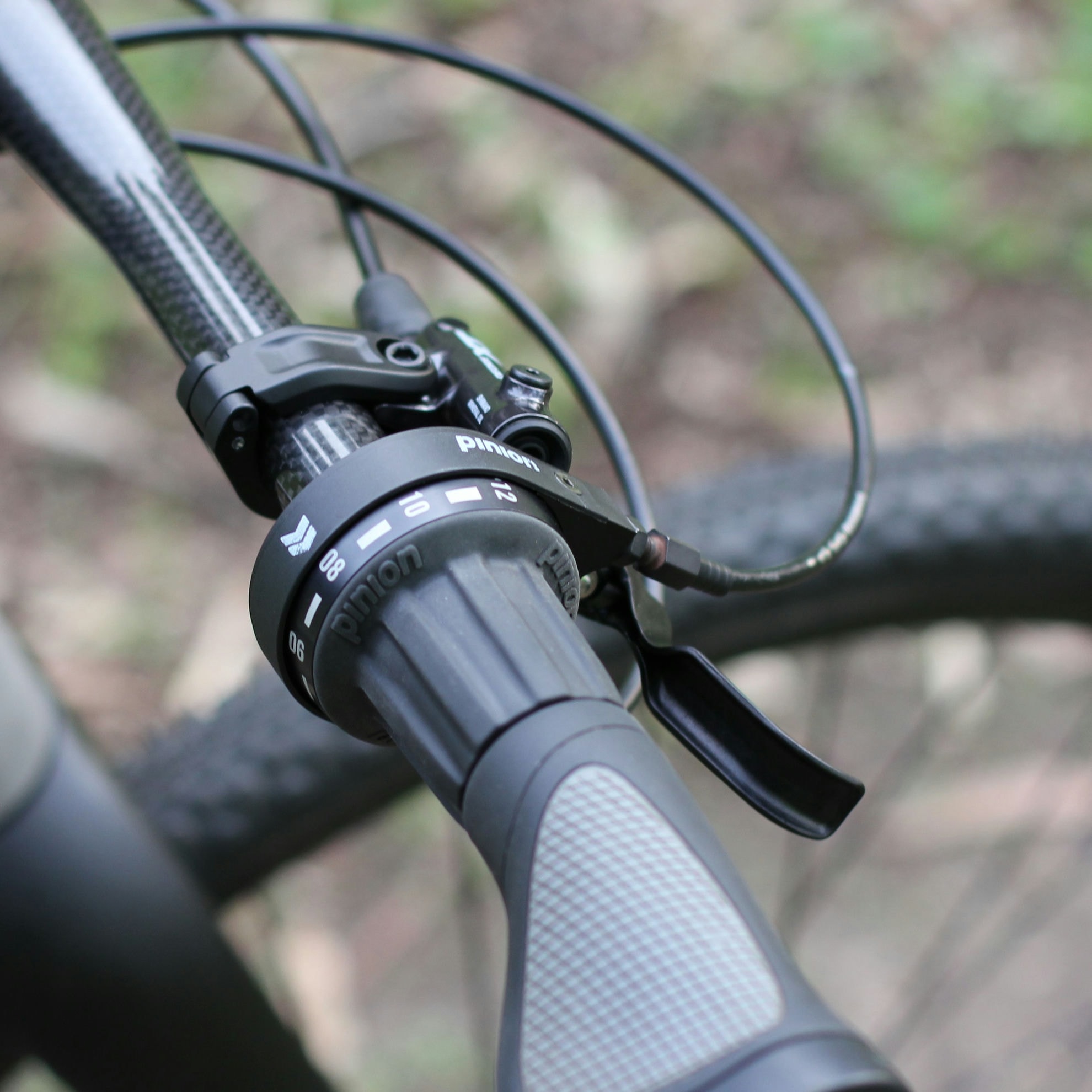
| How it shifts | Twist grip-shifter, via two gear cables | Electronic. Push a button, a small motor changes gear |
| Shift speed | Quick, but you ease off pedalling to shift | 0.2 seconds, shifts under load but easing off pedals still helps |
| Shift while stopped | Yes | Yes, ideal for stop-start riding |
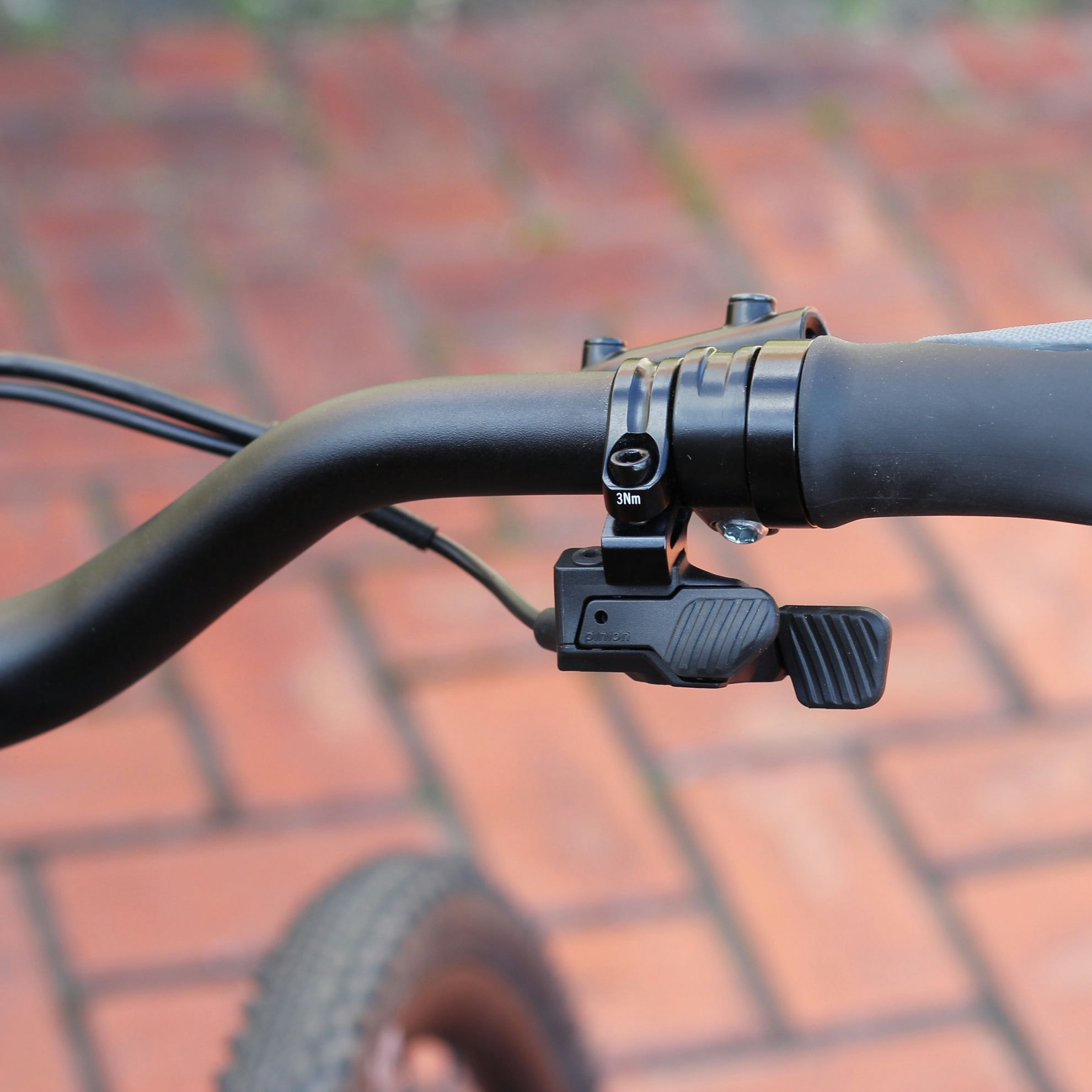
| Power | None needed | Battery: 10,000 shifts (100 hrs) per charge, 3 hr recharge, IPX7 waterproof |
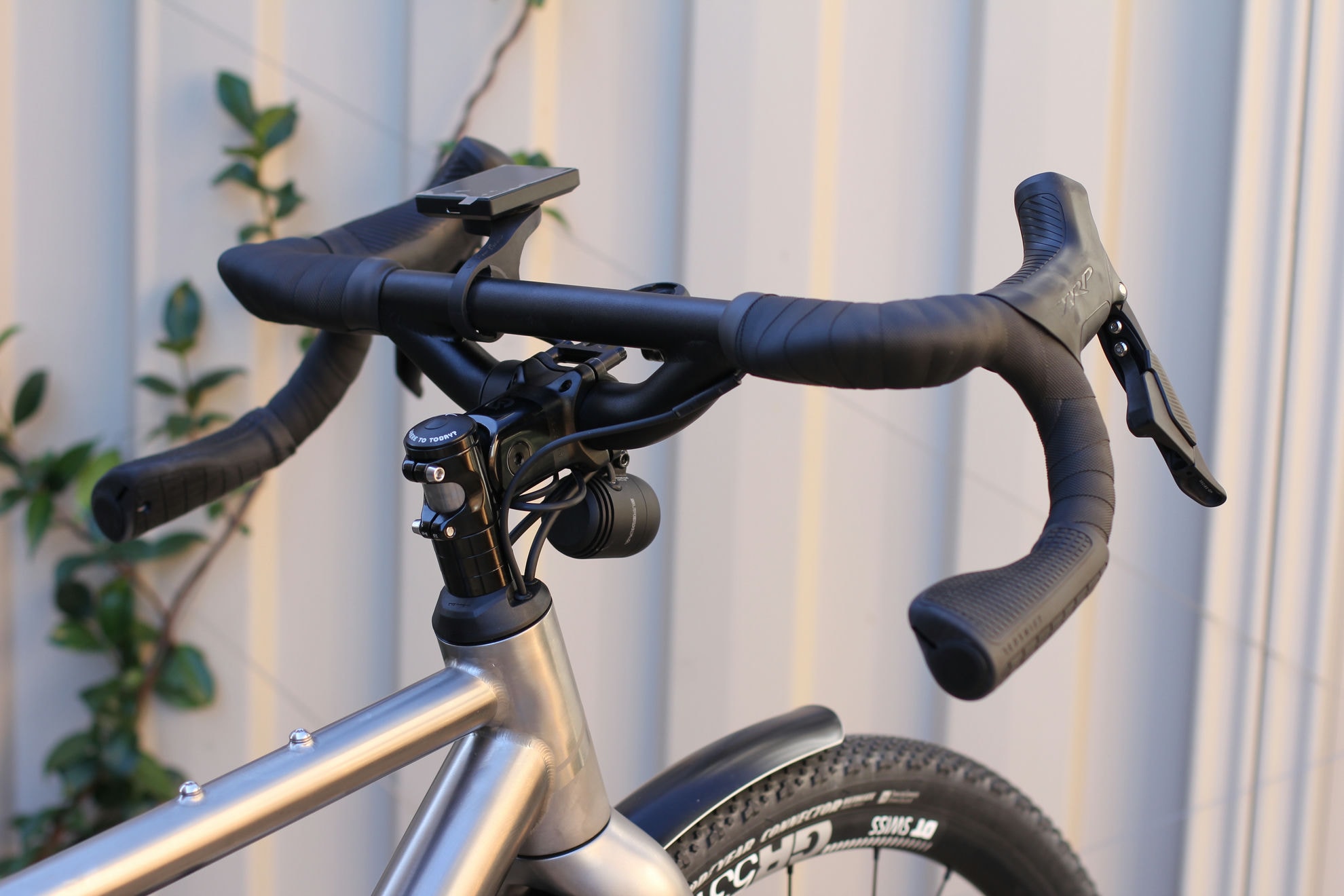
| Drop-bar option | Enabled though hibox, but performance is limited | Yes, TRP Hywire lever |
| Smart features | None | Pre-select, auto-shift modes (e.g. drop to start gear when stopping) |
| Gearbox | C1.12 (and others) | C1.12i, a different internal design |
Pros and cons
Sealed, even, built to last.
Almost no maintenance, with an oil change about once a year and no derailleur to knock out of alignment. Shifts in any condition, mud, grit, cold or wet. A huge, even gear range up to 600%. The mass sits low and central at the bottom bracket for balanced handling and less unsprung mass. And with no cassette, the rear wheel can be built stronger and more symmetrically.
Heavier, costlier, committed.
A Pinion system is heavier than a derailleur setup and around 150g heavier than a Rohloff hub. It loses a little more to friction (numbers below). As a premium component inseparable from a custom frame, it sits at the top of the price scale. The mechanical grip-shift can feel soft or notchy. And it can't be retrofitted, the frame has to be built around it from the start.
Intricacies worth knowing
A Pinion is built from two internal sub-units, a finely-stepped set of gears multiplied by a second set, which is how it produces 12 evenly-spaced ratios from a compact box (the same principle as a car gearbox). Because only two cogs are engaged at any time, it stays reasonably efficient despite all those gears. It runs in a self-lubricating oil bath, which is why maintenance is so low. And it's almost always paired with a belt rather than a chain: silent, greaseless, and matching the gearbox's low-maintenance character.