In this guide
All titanium guides

The complete guide to bike forks

Bike forks, properly explained.

The fork is one of the most consequential parts of a bicycle, and one of the least understood. It carries the front wheel, but it also decides how the bike steers, how much of the road you feel, how confidently it holds a line on a loose descent, and how it copes with a long day on rough ground.

Choose well and the bike disappears underneath you. Choose badly and you fight it on every ride. This guide is for riders who want to understand the fork before they choose one — not just buy a part off a shelf.

01

Rigid or suspension: the first decision

Where every fork choice starts.

Before material, before brand, before numbers, there is one fork decision that shapes all the others: rigid or suspension.

A suspension fork uses an air spring or coil and a damper to absorb impacts. It is the right answer for aggressive mountain biking — technical singletrack, drops, sustained rough descents — where the terrain demands real travel. It adds weight and moving parts that need servicing, and it costs efficiency on smooth ground.

A rigid fork has no moving parts. On road, gravel, touring and most adventure riding, a well-chosen rigid fork — usually carbon, sometimes titanium or steel — is lighter, simpler, more efficient and effectively maintenance-free. The compliance comes from the material and the tyres rather than a damper.

For most riders researching a considered, lasting build — the gravel rider, the road rider, the bikepacker — the honest answer is a rigid fork. We say that plainly because it is true, not because it is convenient. The exception is the hardtail mountain rider seeking proper trails, where suspension earns its place.

Right for most riders

Rigid

Lighter, simpler and effectively maintenance-free. The default for road, gravel, touring and adventure. Comfort comes from the material and the tyres.

Right for proper trails

Suspension

Real travel for technical singletrack, drops and sustained rough descents. Worth the weight and servicing only when the terrain genuinely demands it.
Rigid
Suspension
02

What a fork is made of, and why it matters

The material decides the feel.

Once you have settled rigid vs suspension, material is the next lever — and the one that most directly shapes how the bike feels. Every material is a trade-off across four factors: weight, compliance (comfort), stiffness (steering precision) and durability.

A quick note on language: suspension is a fork type, while carbon, titanium and steel are materials. Riders choose between all of them at the same moment, so we treat them side by side here — that is how the decision actually gets made.

Carbon

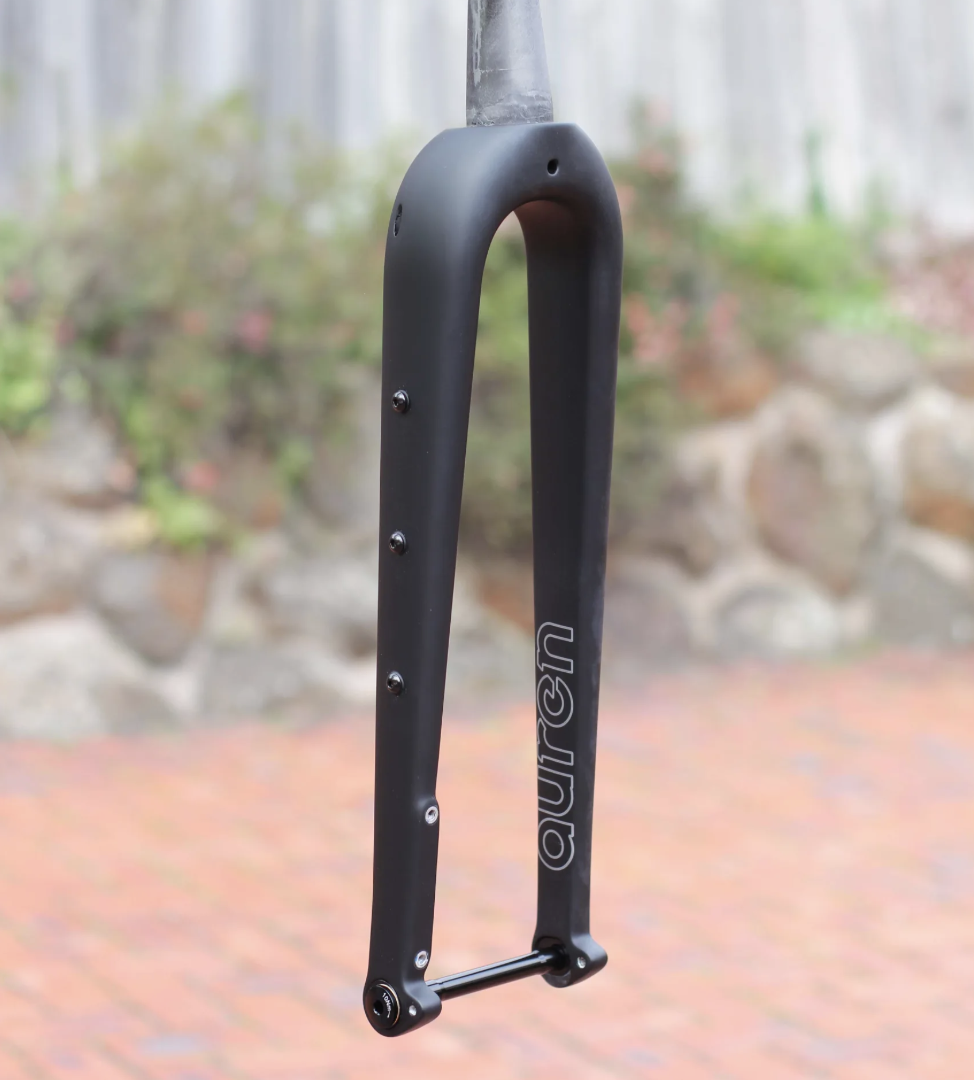
The default for performance rigid forks. The lightest option, and engineers can tune compliance into the layup — stiff where you want steering precision, giving where you want comfort. Superb for road and fast all-road riding. The trade-off is that carbon can crack on a hard, concentrated impact rather than bend.

Titanium

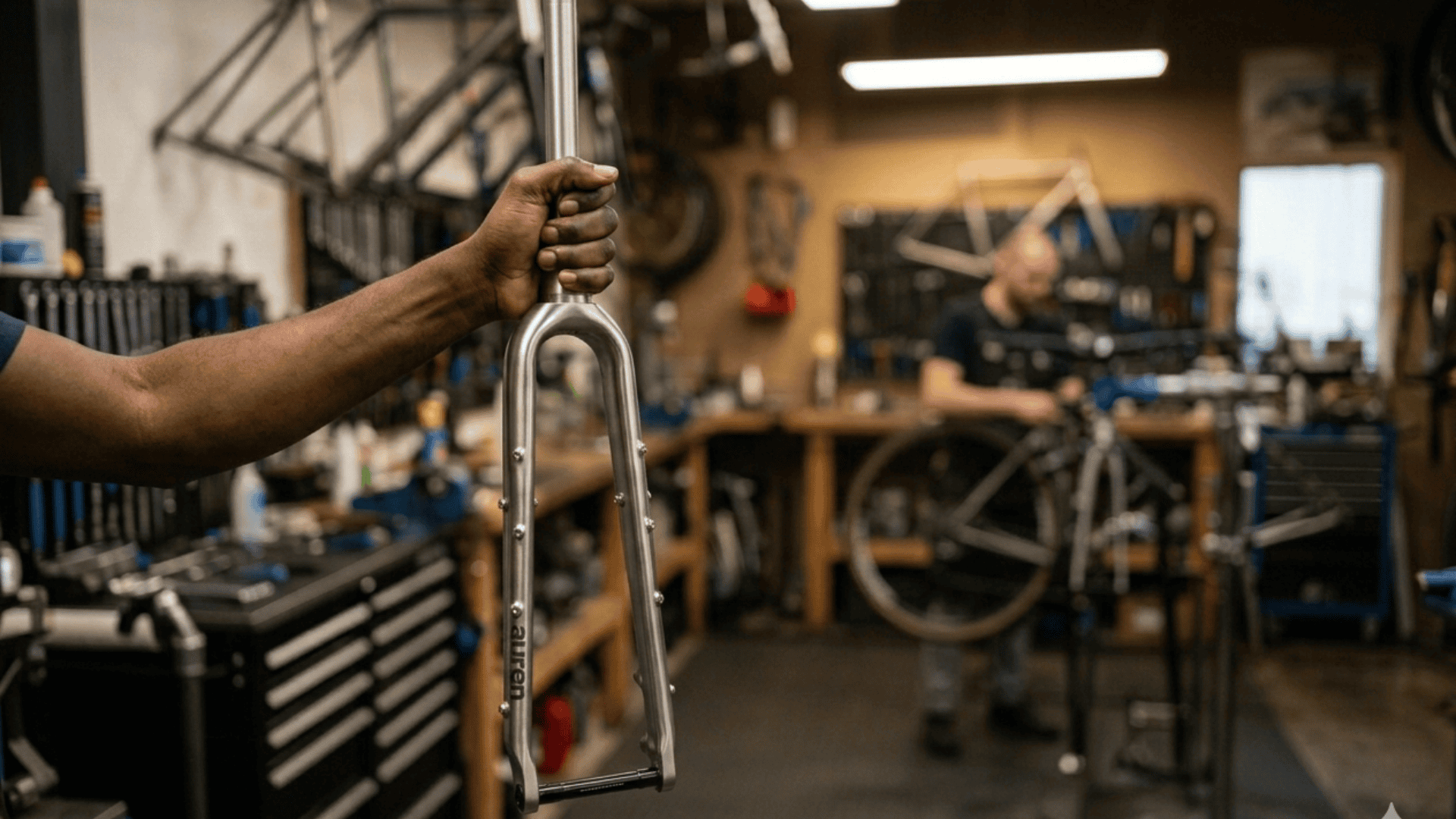
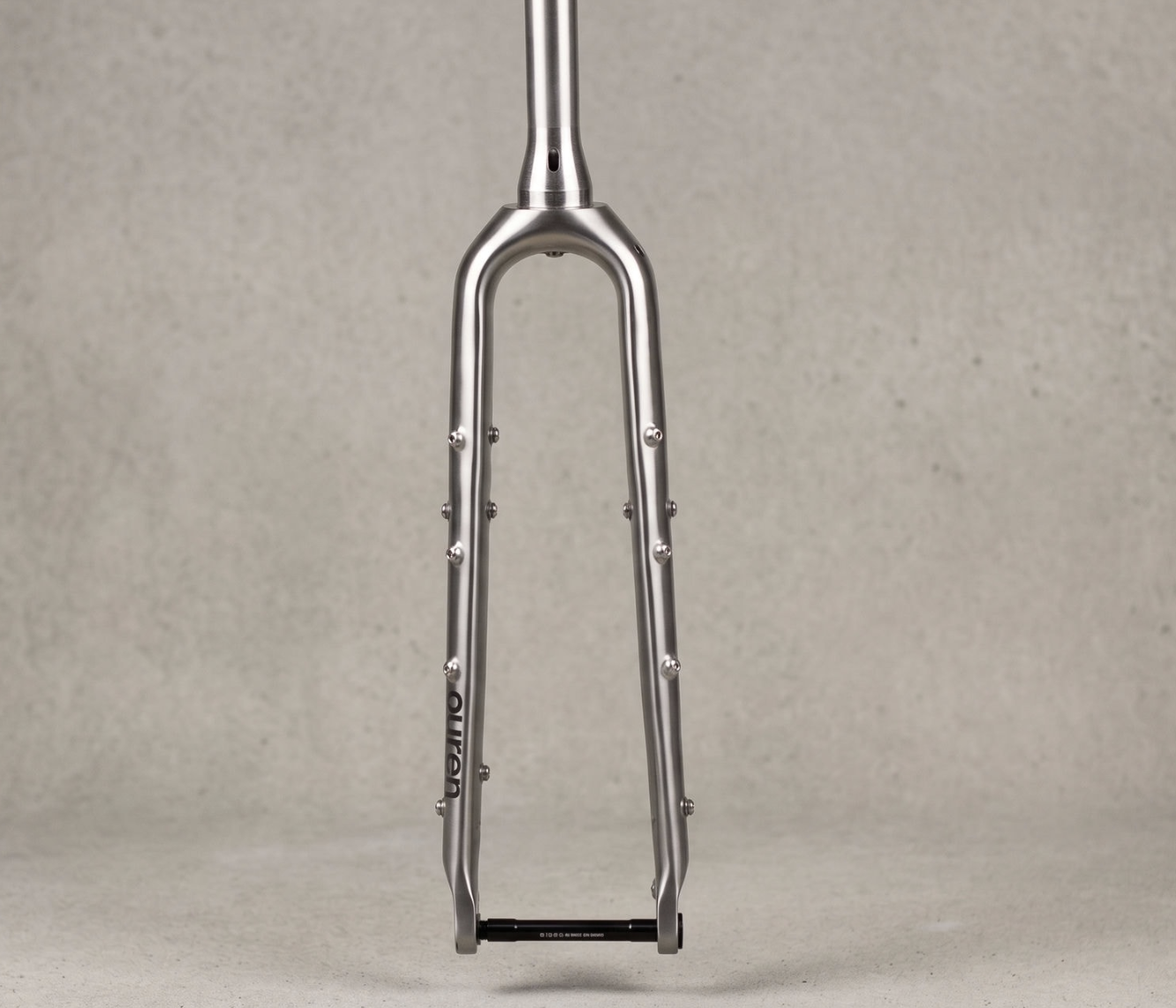
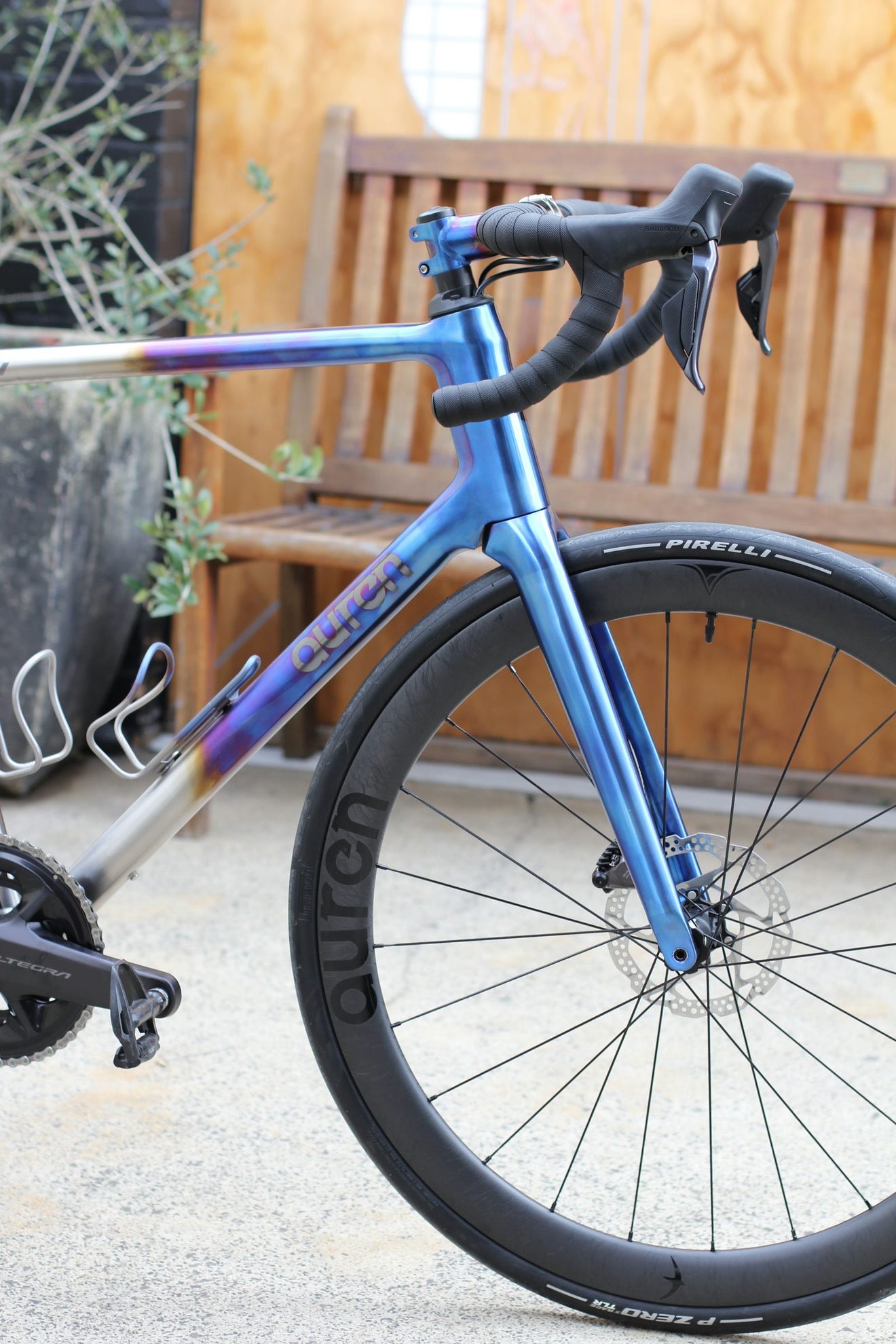
Rare, and a natural match for a titanium frame. It carries a built-in compliance that takes the edge off rough surfaces, it does not corrode, and it is effectively a fork for life. Heavier than carbon but far more forgiving of abuse — the right answer for a loaded, ride-it-for-decades build.

Steel

The classic. Beautifully compliant and endlessly repairable, but heavy, and it can rust if the finish is compromised. Still loved on traditional touring builds.

Aluminium

Light and cheap, but stiff and harsh — it transmits road buzz straight to your hands. Common on entry-level bikes, rarely the right choice when comfort over distance matters.

Auren carbon fork
Auren carbon fork
Auren Titanium Fork
Auren Titanium Fork
What to look for

Match the material to the job, not the spec sheet. Light and fast on smooth ground points to carbon. Comfort and longevity on rough ground, loaded, for years, points to titanium. The lightest fork is not automatically the best fork — it is the best fork for one particular kind of riding.

At a glance
Three forks, three jobs.

Where each fork type sits across lightness, rough terrain and carrying capacity — and the band of ground it’s built for.

Lightness
Rough terrain
Carrying
Race & all-road
Lightness
Rough terrain
Carrying
Rough terrain & comfort
Lightness
Rough terrain
Carrying
For life & loaded
Carbon
Titanium
Suspension
Smooth hardpackChunky singletrack
To learn about bike frame materials How to find the right frame material for you guide.
02

Why aren't titanium forks more common?

The rise of titanium forks.

Titanium is one of the best frame materials there is — so why do so few bikes wear a titanium fork? The answer is in the physics of a fork versus a frame.

Titanium flexes more than other materials. In a frame, that flex is a feature: the frame is a triangulated truss structure, so the give translates into the springy, road-smoothing compliance titanium is loved for. A fork is different. A traditional two-legged fork behaves like a cantilever — a beam anchored at one end (the steerer) with the load way out at the other (the axle). Titanium’s flexibility, so welcome in a frame, becomes a liability in a cantilever: traditional tube-style titanium forks often had undesirable riding characteristics — shuddering under braking, too much flex over bumps, and a vagueness in the steering that robbed precision.

That’s the historical reason titanium forks stayed rare while titanium frames thrived.

Cantileverflexes under loadloadTrussbraced — stays preciseload

What’s changed is the engineering. New designs and manufacturing techniques let builders overcome the cantilever problem.

Truss-style forks

Brace the fork legs against each other, turning a flexy cantilever into a far stiffer triangulated structure — the same principle that makes a titanium frame work. The result is precise handling and no brake shudder, while keeping titanium's comfort.

3D printing and casting

Allow complex, optimised fork crowns and dropouts that weren't possible with simple welded tubes — stiffness exactly where the fork needs it, compliance where it helps.

Together these mean a modern titanium fork can finally have the handling and flex characteristics a good fork needs, alongside the durability and longevity titanium is known for. The material’s old weakness at the front of the bike has been engineered out.

A 3D-printed crown braces the fork legs, engineering out the old cantilever flex.
Want to explore this further? Check out this Auren guide. How to find the right frame material for you guide.
04

The geometry hidden in a fork

Why two forks that look alike ride nothing alike.

A fork is not just a tube with a wheel on the end. Three measurements determine how the bike steers, and they are why two forks of the same length can feel completely different.

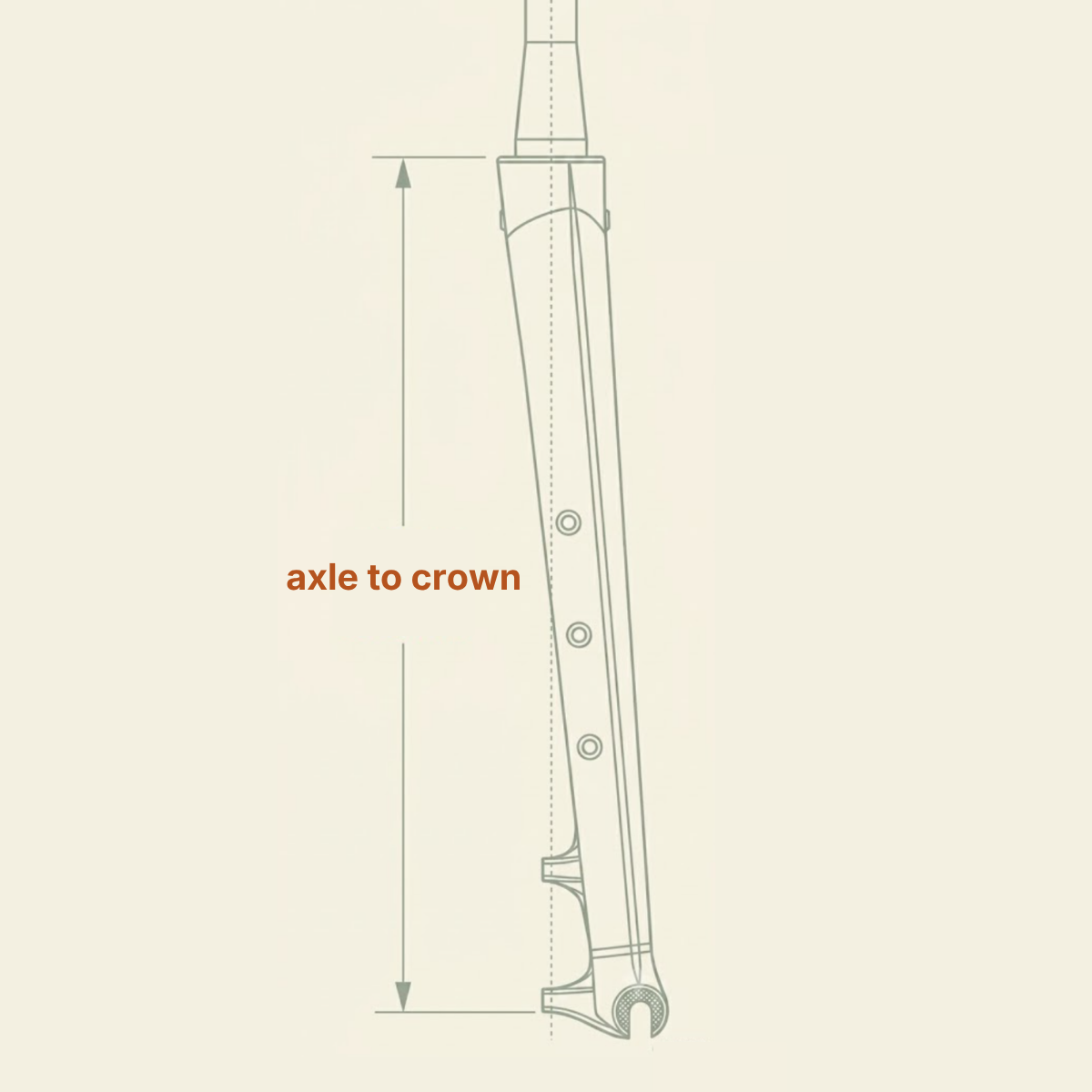
Axle-to-crown fork measurement illustration

Axle-to-crown

The fork’s length, from the wheel axle to the crown. Change it and you change the whole front end — head angle, ride height, handling. It is also the number that decides whether a fork even suits a given frame.

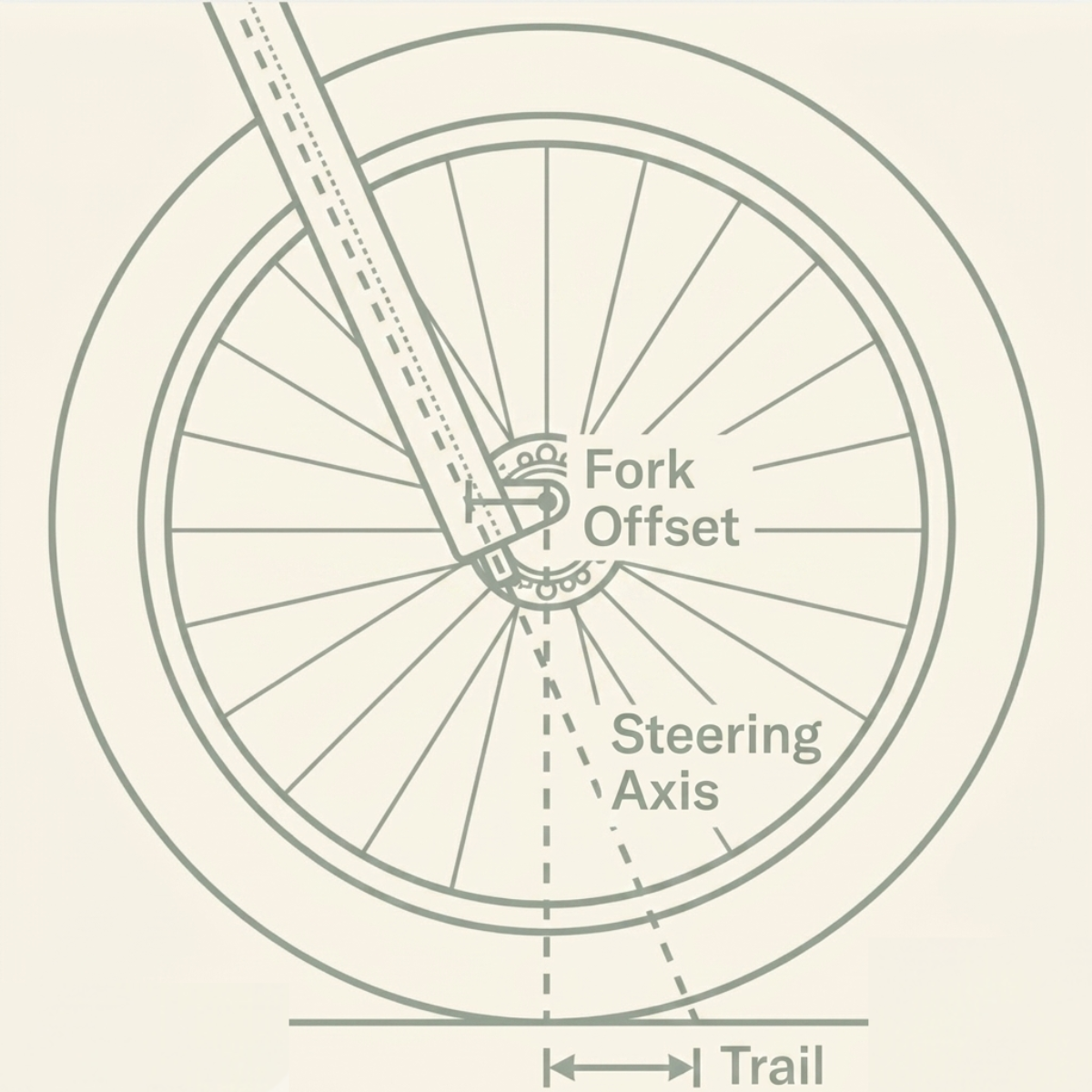
Fork offset explained illustration

Offset (rake)

How far the axle sits ahead of the steering axis. More offset quickens the steering; less offset slows and stabilises it.

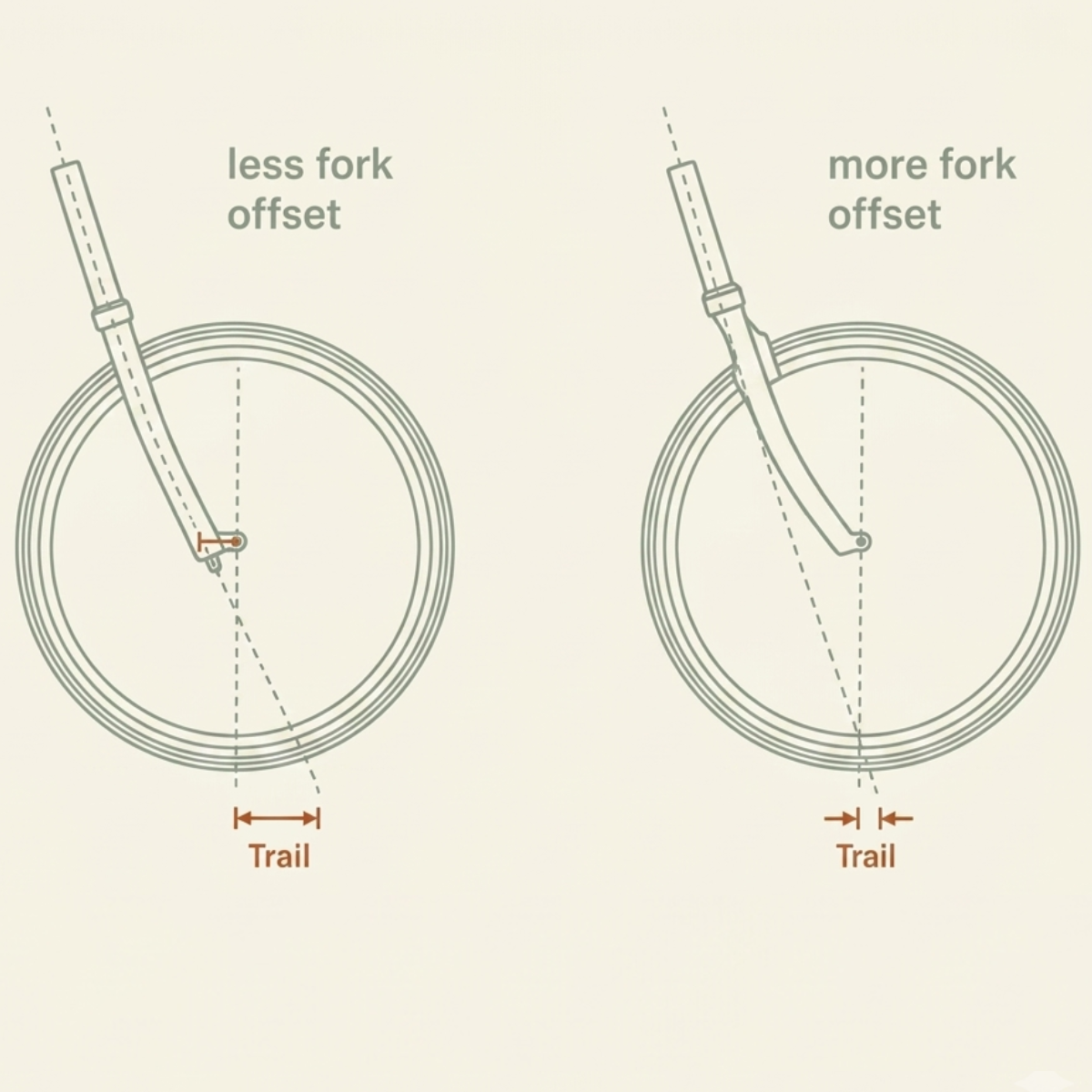
Fork trail explained illustration

Trail

The result of head angle and offset together. More trail means calmer, more planted steering — what you want loaded or descending. Less trail means quicker, livelier steering — what you want on a responsive road bike.

05

Will this fork fit my bike?

The compatibility questions, answered.

This is the most-asked cluster of fork questions, and most of it comes down to a few compatibility checks. Tap through each one.

Steerer and head tube.

The steerer is the tube that runs up through the frame’s head tube into the stem. It has to match the frame’s standard (today, almost always tapered) and have enough length to go through your frame, headset, spacers and stem. A mismatch here is a hard stop.

Wheel size.

A fork is built around a wheel size. A 29er fork and a 27.5 fork are not interchangeable as a matter of course — the axle-to-crown differs, which changes the geometry. Putting the “wrong” wheel size in a fork alters how the whole bike steers, even when it physically fits.

Travel (suspension only).

Frames are designed around a travel range. Fitting a longer-travel fork than a frame was designed for slackens the geometry and can overstress and even void the warranty on the frame. Stay within what the frame was built for.

Brake, axle and clearance.

Disc mount standard, axle type and width, and tyre clearance all have to line up — and tyre clearance in particular is what decides how capable the bike is on rough ground.

What to look for

On an off-the-shelf bike, every one of these is a constraint you work around — you are limited to forks that fit a frame someone else specced. On a custom build, the logic runs the other way: the fork is chosen first, and the frame is designed around it. The compatibility questions simply stop being problems.

03

The fork as cargo real estate

Mounting bags, bottles and gear.

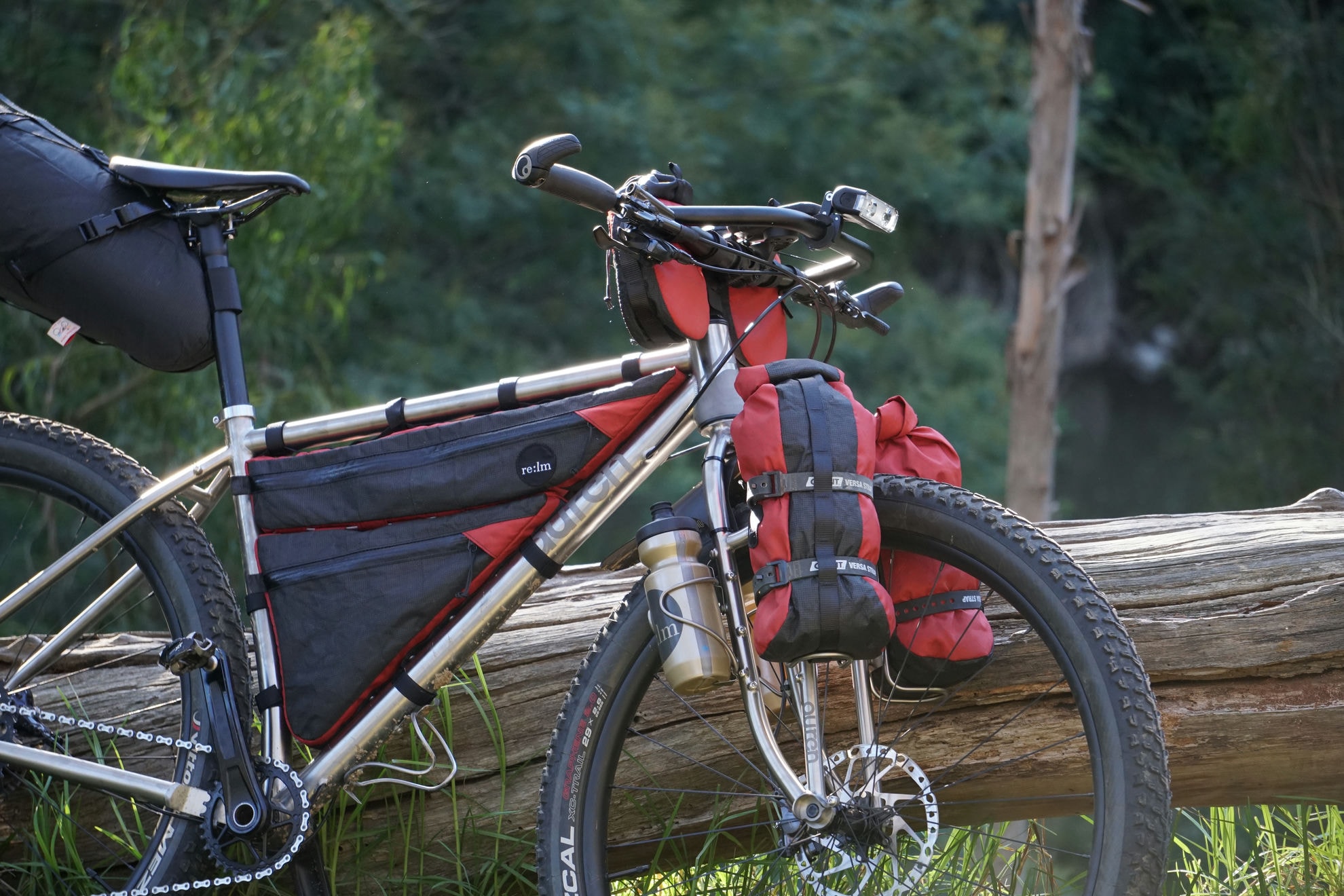
For bikepacking and endurance riding, the fork is some of the most useful real estate on the bike. Mounting gear out on the fork legs helps balance the bike’s overall front-to-rear weight distribution, and it keeps the weight of your kit down low — both of which make a loaded bike handle far better than one with everything piled high at the back.

Not all forks carry gear equally well. A fork’s real carrying capacity comes down to how it’s built.

More mounts, better placed

The more bottle and cargo-cage bosses a fork carries, the more you can attach — and where they sit matters as much as how many there are.

Welded-in, not riveted

Mounts that are welded into the fork are far stronger and more reliable under load than riveted ones, which can work loose or tear out when you're carrying weight over rough ground.

A double leg (truss fork)

A braced, double-leg truss fork is structurally stiffer and stronger than a simple two-legged fork, so it can carry more without flexing or losing steering precision — which is exactly what you want when the front of the bike is loaded.

Weaker under load

Riveted mounts

Pressed into the fork after the fact. They can work loose or tear out when you're carrying weight over rough ground.

Built to carry

Welded-in mounts

Bonded into the structure of the fork. Far stronger and more reliable under a loaded, long-distance build.

What to look for

If bikepacking or loaded touring is on the cards, the fork’s mount layout and construction matter as much as its weight. A purpose-built fork — enough mounts, welded in, braced for the load — is the difference between gear that rides quietly for a thousand kilometres and gear that rattles loose on day two.

Want to explore this further? Check out this Auren guide. Customisation — the Mounts & Forks options
07

Match the fork to the rider

The right fork for how you ride.

There is no single best fork — only the best fork for a particular rider and a particular kind of riding. Here is where each type lands for the three riders we build for most.

Light, stiff, precise.

A carbon rigid fork with road-tuned geometry — lower axle-to-crown, more responsive steering — and no need for mounts. The priority is efficiency and steering feel over outright comfort, because the surfaces are smooth and the rides are fast.

Typically: carbon · low axle-to-crown · race-leaning geometry · clean, mount-free
The core of what we build

Compliance and capacity.

A carbon fork for the rider chasing speed; a titanium fork for the rider going loaded, long and for years. Tyre clearance for volume, mounts for bags, bottles and racks, and a geometry tuned to stay calm under load. This is where the most thought goes, because it is where most riders are.

Typically: carbon or titanium · generous tyre clearance · cargo & fender mounts · stable, load-ready geometry

Durability over weight.

Either a suspension fork with real travel for proper trails, or a burly rigid fork for rough-but-not-technical adventure riding. More clearance, more strength, a geometry built to take a beating.

Typically: suspension or stout rigid · maximum clearance · slacker, tougher geometry · built to be abused
Auren custom titanium low-standover Pinion gravel bike
Two riders on the same frame can want completely different forks — on a custom build, they get them.
What to look for

The fork is one of the clearest expressions of how you actually ride. Two riders on the same frame can want completely different forks — and on a custom build, they get them.

04

The fork as part of a custom build

Chosen with you, not dictated by a shelf.

On an off-the-shelf bike the fork is a given. It came with the frame, or it is one of two options, and you choose around it. On a custom titanium build it is one more thing chosen with you — matched to your geometry, your terrain, your riding and the way you want the bike to feel.

That is the difference between a fork that fits the bike and a fork that fits you. Will talks every build through one-on-one — the riding you do, the loads you carry, the feel you are after — and the fork is specced into the frame from the start rather than bolted on at the end.

05

The questions buyers actually ask

Forks, frequently asked.

How do I know what fork fits my bike?

Three things have to match: the steerer standard and length, the wheel size the fork is built for, and — for suspension — the travel range the frame was designed around. Brake mount, axle and tyre clearance need to line up too. On a custom build the fork is chosen first and the frame designed around it, so fit is never a guessing game.

Can I put a 29er fork on a 27.5 bike (or vice versa)?

Not as a like-for-like swap. The axle-to-crown length differs, which changes the bike’s geometry and steering even when the fork physically bolts on. It can be done deliberately to alter handling, but it is a geometry decision, not a straight substitution.

Can I put longer-travel forks on my bike?

Only within the range the frame was designed for. A longer-travel fork slackens the geometry and can overstress the frame — and void its warranty. Stay inside the frame’s intended travel.

Why are titanium forks so rare?

Because a fork acts like a cantilever, and titanium’s natural flex — an asset in a triangulated frame — historically caused brake shudder, excess flex and vague steering in a simple two-legged titanium fork. Modern truss designs and 3D-printed crowns brace the structure and engineer that weakness out, so titanium forks can now handle precisely while keeping the material’s comfort and durability.

Can I mount bags and bottles on my fork?

Yes — and for bikepacking it’s one of the best places to carry weight, because it sits low and balances the bike front-to-rear. How much you can carry depends on the fork: look for plenty of mounts, welded in rather than riveted, and ideally a braced double-leg (truss) design for strength under load.

Chosen with you

The fork that fits the bike, or the fork that fits you.

There is no single best fork — only the best fork for a particular rider and a particular kind of riding. On a custom titanium build the fork is specced into the frame from the start: matched to your geometry, your terrain, the loads you carry and the feel you're after. Will talks every build through one-on-one, so the handling is set deliberately, never inherited by accident.

Custom titanium · Forks specced to your ride · Built one-on-one with Will

0