
Cheap vs affordable
All eBike guides

Cheap eBike guide

The best value eBike isn't necessarily the cheapest.

Not wanting to overspend on an eBike is the right instinct. But the cheapest eBike you can find often means replacing it in two years, or living with compromises in quality, performance, comfort or function. This guide covers:

  • What actually makes an eBike cheap
  • How to optimise for cost per use
  • The specs and components worth looking for if you want your bike to last
  • How to define your non-negotiables, and the areas you’re genuinely happy to compromise on
  • Understanding the cheap eBike market in Australia
  • How to buy an affordable eBike without sacrificing quality or your non-negotiables
01

Where the cost comes out

What makes cheap eBikes cheap.

Two things drive eBike pricing more than anything else: the component choices the brand made, and the cost of the distribution model they built around them.

Components are the dominant factor. The battery cells, motor, drivetrain, brakes, and display each sit on a quality spectrum, and the choices made across those five categories account for the bulk of the price difference between a $1,500 bike and a $4,000 one. Better components mean better performance, better safety, and a longer lifespan — and each gets its own section in this guide.

Beyond the parts themselves, a few other factors come into play. Frame and build quality affects weight and longevity. A brand name can add to the markup. And the distribution model matters — direct-to-consumer is often cheaper than selling through a showroom.
02

Optimising for lifetime value

Cost per use, not cost on day one.

Measured on cost per use, cheap eBikes often end up more expensive than mid-range ones, because they tend to have shorter lifespans. The three key specifications to look for if you want a bike designed to last longer and need less maintenance are:

Belt drive over chain and derailleur.

A carbon belt runs dry and clean, doesn't stretch or rust, and lasts several times longer than a chain. A chain with an exposed derailleur needs regular oiling and adjustment, and wears through the parts around it over time.

Hydraulic disc brakes.

Hydraulic discs self-adjust as the pads wear and need far less attention than cable-operated brakes, while giving more consistent stopping power in all conditions.

Frame and finishing quality.

Look for hydroformed or properly welded alloy frames. Reputable brand-named components in wheels, hubs and cranks are a good shortcut, and brands that offer at least two years of frame warranty are a sign they stand behind the build.

03

Batteries — range, lifespan and safety

Where the battery matters most.

Battery quality affects three things: range, lifespan and safety.

On range, a quality cell tends to deliver closer to its advertised figure and holds that capacity for longer. Cheaper cells often underperform their stated range and degrade faster, so the range you bought the bike for shrinks within a year or two.

On lifespan, a quality cell degrades more gradually across hundreds of charge cycles. A cheaper unbranded cell varies more in consistency, loses capacity faster, and is harder to replace like-for-like when it fails.

On safety, nearly every eBike fire reported in Australia has involved cheap, unbranded cells with no battery management system (BMS) — the electronics that prevent a battery entering the state that causes a fire. If a listing won’t tell you whose cells are inside, that silence is your answer.

What to look for

Named cell brands — Samsung, Panasonic and LG are the most common — and an integrated BMS.

04

Motor — performance and drive

How the motor feels, and how far it goes.

The motor is where the difference between a cheap and a well-made eBike is easiest to feel. A cheaper motor tends to deliver power in a less smooth, less responsive way, can be noticeably noisier, and often has less torque — which shows up most on hills and when pulling away from a stop. A better motor feels quieter, smoother and more natural, assisting you rather than surging or lagging.

Torque (Nm).

It tells you how much pulling power the motor has. For a commuter eBike, 50–80 Nm handles hills and loaded starts comfortably. Worth noting: manufacturers measure Nm differently, so two bikes with the same torque spec on paper can feel quite different in practice. Two forms of due diligence — look for customer mentions of power or torque in reviews, and if possible, test ride on an actual hill before committing.

Brand name.

Look for reputable named motor makers such as Bosch, Shimano, Bafang or Ananda. This means a tested, documented product with parts and service support.

Cadence vs torque sensing.

Better motors use torque sensing — the motor reads how hard you're pedalling and responds proportionally, creating the natural, smooth feeling. Cheaper motors use cadence sensing, which detects whether you're pedalling and applies a fixed amount of power, which is what creates the surging or lagging feeling.

For more info What is an Automatic eBike
05

Drivetrain — performance, maintenance, longevity

The drivetrain is where daily costs add up.

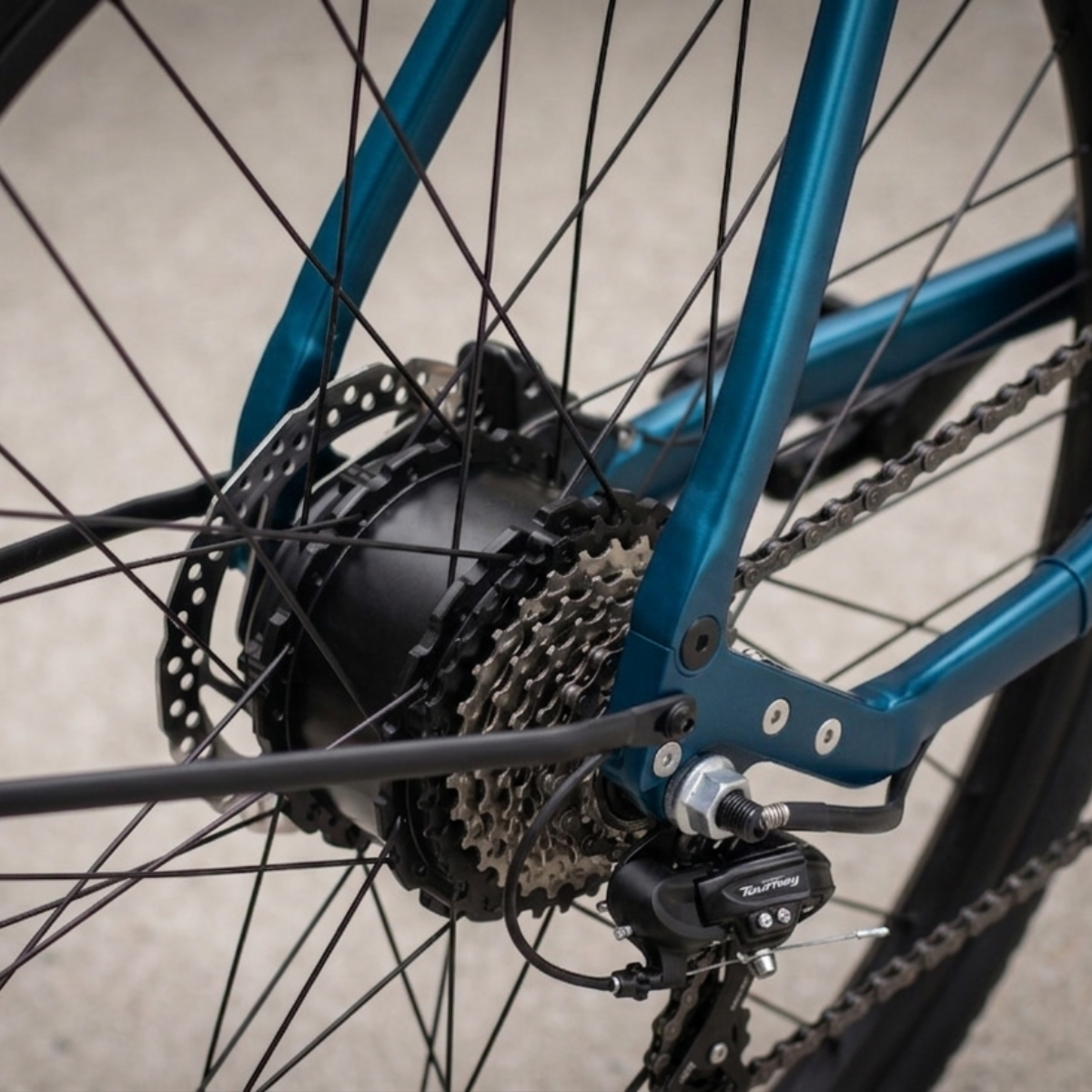
Most eBikes, especially cheap ones, use a chain and derailleur. It’s the default because it’s cheap. But it’s also the part that demands the most ongoing attention: regular oiling, adjustment, and replacement every 12–18 months before it wears out the more expensive parts around it.

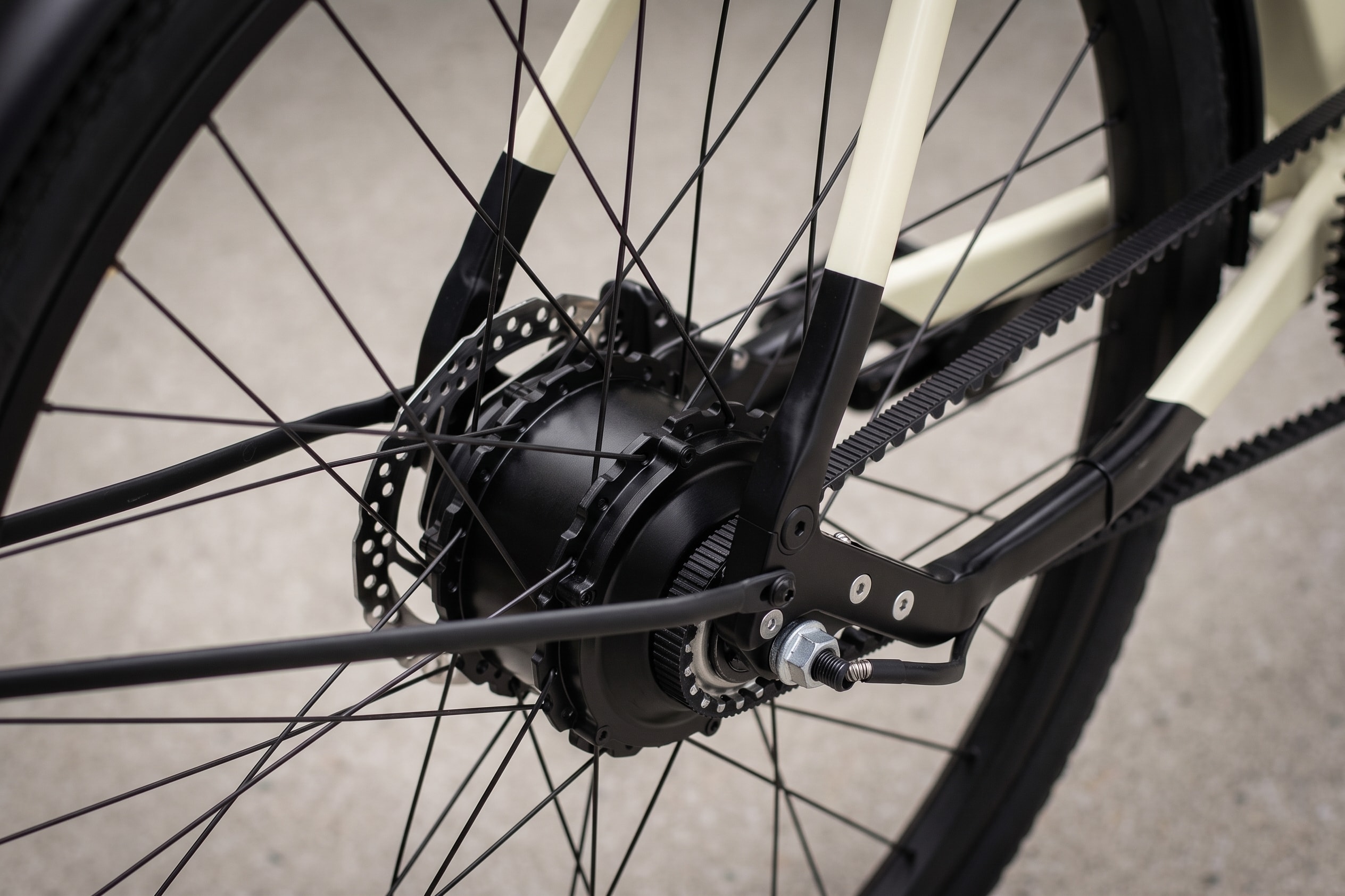
A belt drive is the alternative. A carbon belt runs dry and clean, doesn’t stretch or rust, needs no oiling, and is rated past 30,000 km — several times the life of a chain. It also runs silently and leaves nothing on your trousers. For a daily rider, the maintenance difference is significant.

Belt drive is still more common on mid-range and premium bikes, but it’s becoming more accessible, and some well-priced direct-to-consumer bikes now offer it at a price point that would have been unusual a few years ago.

What to look for

Look for belt drive in the spec sheet. If it doesn't mention the belt type, it's almost certainly a chain.

Carbon belt drive: clean, dry, low-maintenance.
Chain and derailleur: more upkeep, more wear over time.
For more info Belt Drive eBike Guide
06

Hydraulic disc brakes — safety, performance, longevity

More than stopping power. Less maintenance too.

Most eBikes come with disc brakes — the question is what kind. Mechanical disc brakes (cable-operated) are standard on cheaper bikes. They work fine in dry conditions but need regular cable adjustment as they wear, and can feel inconsistent in the wet.

Hydraulic disc brakes use fluid pressure instead of a cable. They self-adjust as the pads wear, feel more progressive and consistent in all conditions, and need very little attention between services.

What to look for

The spec sheet will say “hydraulic disc” or “mechanical disc.” If it just says “disc brakes,” assume mechanical. Look for a named brand: Shimano, Tektro and Magura are the most common on quality commuter eBikes.

07

Frame — comfort, weight and ergonomics

How it fits, and how it handles.

Cheaper bikes can be hit and miss when it comes to good ergonomic design — the geometry that lets you sit and pedal in a comfortable, power-efficient position, with handling that feels natural. The risk of getting this wrong is higher at the budget end.

Cheaper bikes often use heavier materials, simply because they’re cheaper to build with. That weight has knock-on effects: if you’ll ever need to carry the bike — onto a car rack, up stairs, or inside for storage — make sure it’s something you can manage. A heavier eBike is also harder to manoeuvre, drains the battery faster, and is much harder to ride if you ever run out of charge. Under 25 kg is the practical benchmark for a commuter eBike.

What to look for

It's worth test-riding before buying. If a bike comes with a money-back guarantee and extended warranty, that's a good sign the maker is confident it rides well — and it gives you the chance to live with the bike before committing.

08

Add-ons — lights, mudguards, racks

What's included, and what it's worth.

A range of features typically don't come on lower-end bikes and are more common on mid-range and top-end models. If they are included on a cheap bike, it's worth checking they're durable rather than flimsy.

Integrated lights.

Cheaper bikes often don't come with integrated lights, which means you need to attach them yourself. Integrated lights run directly off the main battery, so there's nothing separate to charge or forget.

Integrated mudguards.

Most eBikes do come with mudguards. The main difference is that on cheaper eBikes they're more likely to be made of flimsy plastic that rattles loose over time. Factory-fitted mudguards on a quality bike are usually sturdier and better aligned.

Integrated front light.
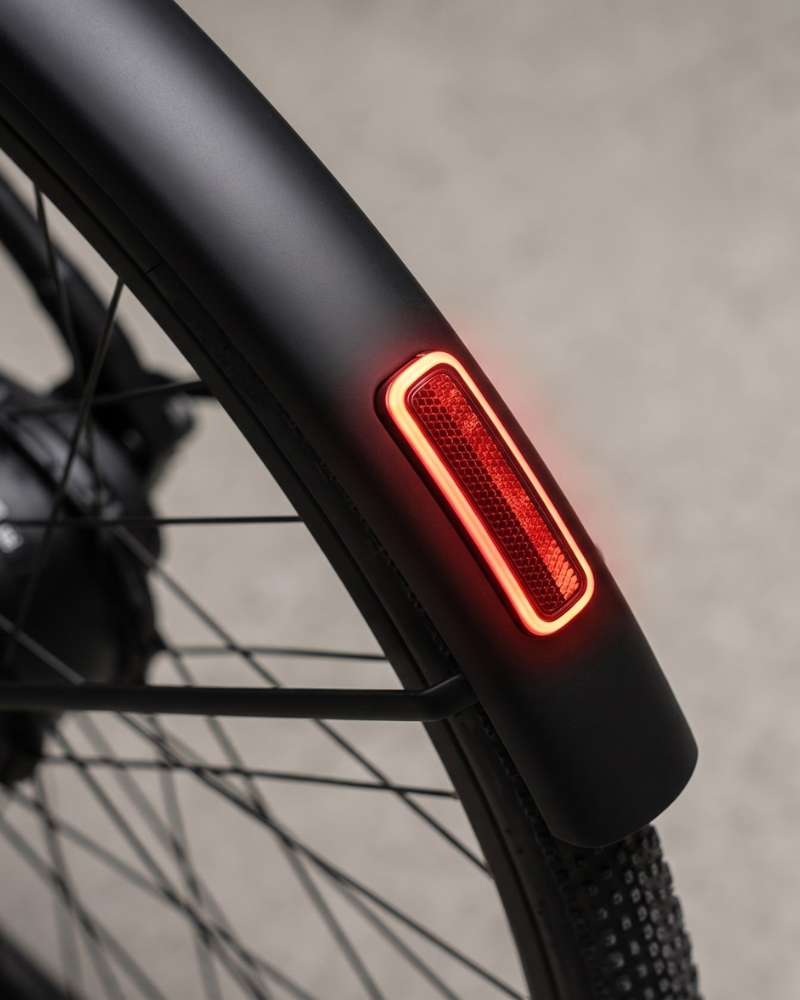
Integrated rear light and mudguard.
09

Defining your non-negotiables

You decide where the bar sits.

There's no single right answer — decide what matters to you and treat those as your minimum. Here are the most common non-negotiables.

Branded battery cells.

A named cell maker with an integrated BMS is the single most important safety factor.

Belt drive.

For those looking for low-maintenance, long-life bikes. Runs dry and clean and lasts several times longer than a chain.

Hydraulic disc brakes.

Self-adjust as the pads wear and give consistent stopping power in all conditions.

Battery over 500Wh.

For more usable range, and capacity that holds up better over the years.

50+ Nm

For decent power on hills and confident take-offs from a standing start.

Under 23 kg.

For easier carrying and handling — on a rack, up stairs, or if you ever run out of charge.

10

Ways to not overpay

Lowering the price, not the baseline.

There are ways to reduce what you pay without compromising your baseline requirements around performance, safety and comfort. The trick is to find brands structured to cost less in the first place, rather than ones cutting the things that matter.

Two factors do most of the work. First, brands that don’t run big margins. Second, brands that don’t carry big overheads — the showrooms, distributors and dealer networks that add cost without adding anything to the bike.

This is often where direct-to-consumer brands come in. By selling straight to you and taking out the middleman, they can offer the same calibre of components at a lower price, because you’re not paying for the supply chain wrapped around the bike.

11

The market, compared

Six bikes, and where each compromises.

A spread of commuter eBikes available in Australia, from the budget trap to the no-compromise premium. Each row shows where the bike holds up against the non-negotiables, and where it asks you to give something up.

Specs and prices are based on preliminary research. Exercise your own discretion and conduct further research before purchasing — prices are subject to change. Data collected June 2026.

NCM T3
~$1,499 NCM T3 Visit site → The budget entry point, and the trap this guide warns about. Real range and a front light, but a chain drivetrain, unbranded cells, and ~28 kg of weight. Cheap on day one, costly per use.
⚠ Unbranded battery ✗ Chain drive ⚠ ~45 Nm ⚠ Hydraulic (T3s only) ✓ Front + rear lights ✗ ~28 kg
Aventon Soltera 2
~$2,050 Aventon Soltera 2 Visit site → The lightweight value pick. Genuine LG/Samsung cells and turn signals at a low price, but it's a chain bike with a 40 Nm motor that struggles on hills.
✓ LG/Samsung cells ✗ Chain drive ⚠ ~40 Nm ⚠ Hydraulic (by trim) ✓ Lights + turn signals ✓ ~19 kg
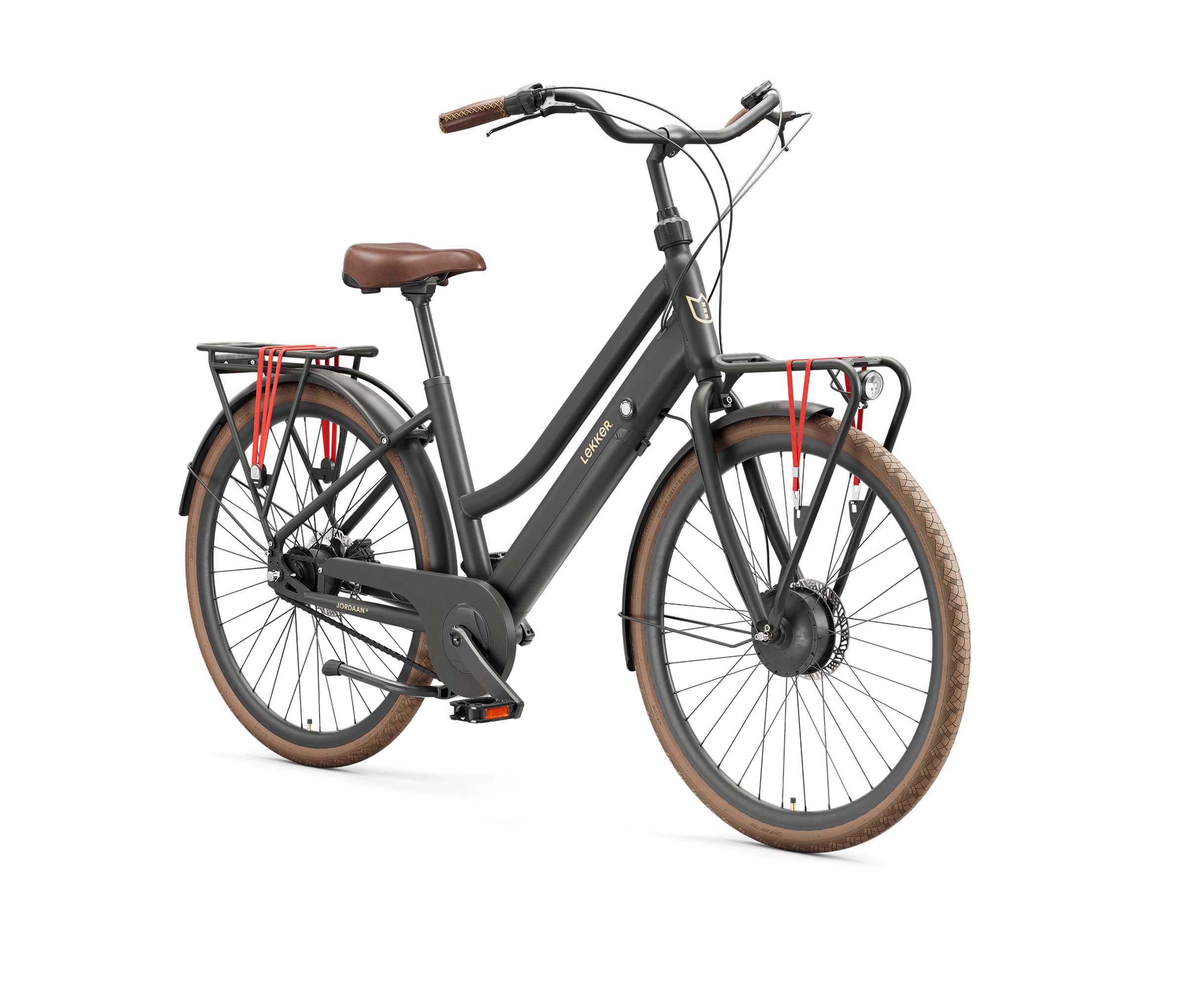
Lekker Jordaan Urban
~$3,498 Lekker Jordaan Urban Visit site → The style-led Dutch commuter. Upright, comfortable, characterful, but heavy at ~25 kg with a chain and a modest 45 Nm motor. You buy it for the feel, not the spec sheet.
⚠ Unbranded battery ✗ Chain drive ⚠ 45 Nm ⚠ Hydraulic (varies) ✓ Integrated lights ✗ ~25 kg
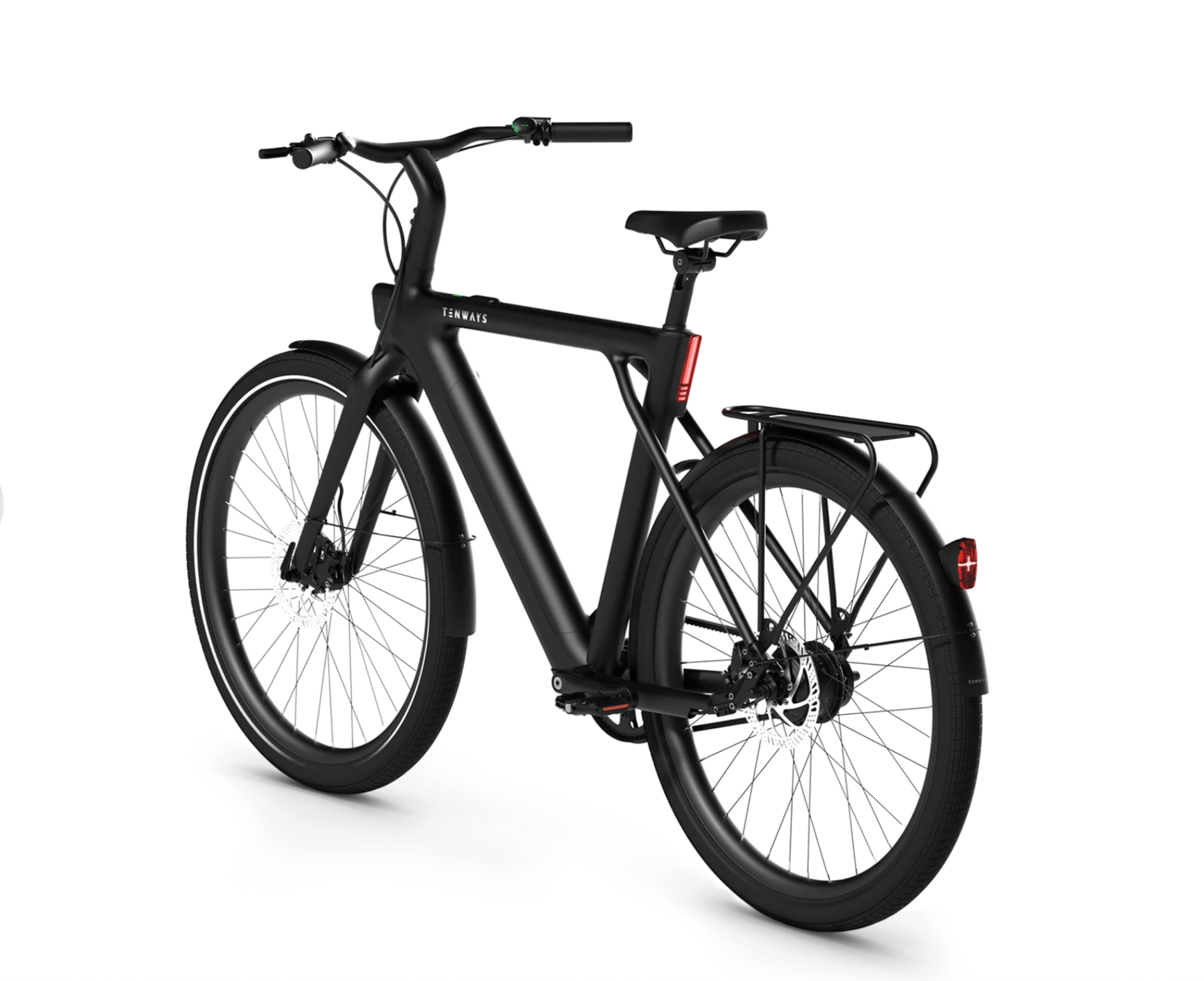
Tenways CGO009
~$2,700 Tenways CGO009 Visit site → The clean-and-quiet pick. Gates belt, light, and well-finished, so almost no maintenance. The compromise is torque: 40 Nm makes it a flat-city bike, not a hill climber.
⚠ Unbranded battery ✓ Gates belt ⚠ ~40 Nm ✓ Hydraulic brakes ✓ Integrated lights ✓ ~19 kg
Auren EV5
$4,400 Auren EV5 Visit site → Belt drive, automatic gearbox, branded Samsung cells, 50 Nm, hydraulics, and integrated lights. Premium-Euro spec without the premium-Euro price.
✓ Samsung 500Wh + BMS ✓ Michelin belt ✓ 50 Nm ✓ Shimano MT200 ✓ Battery-powered lights ✓ Under 23 kg
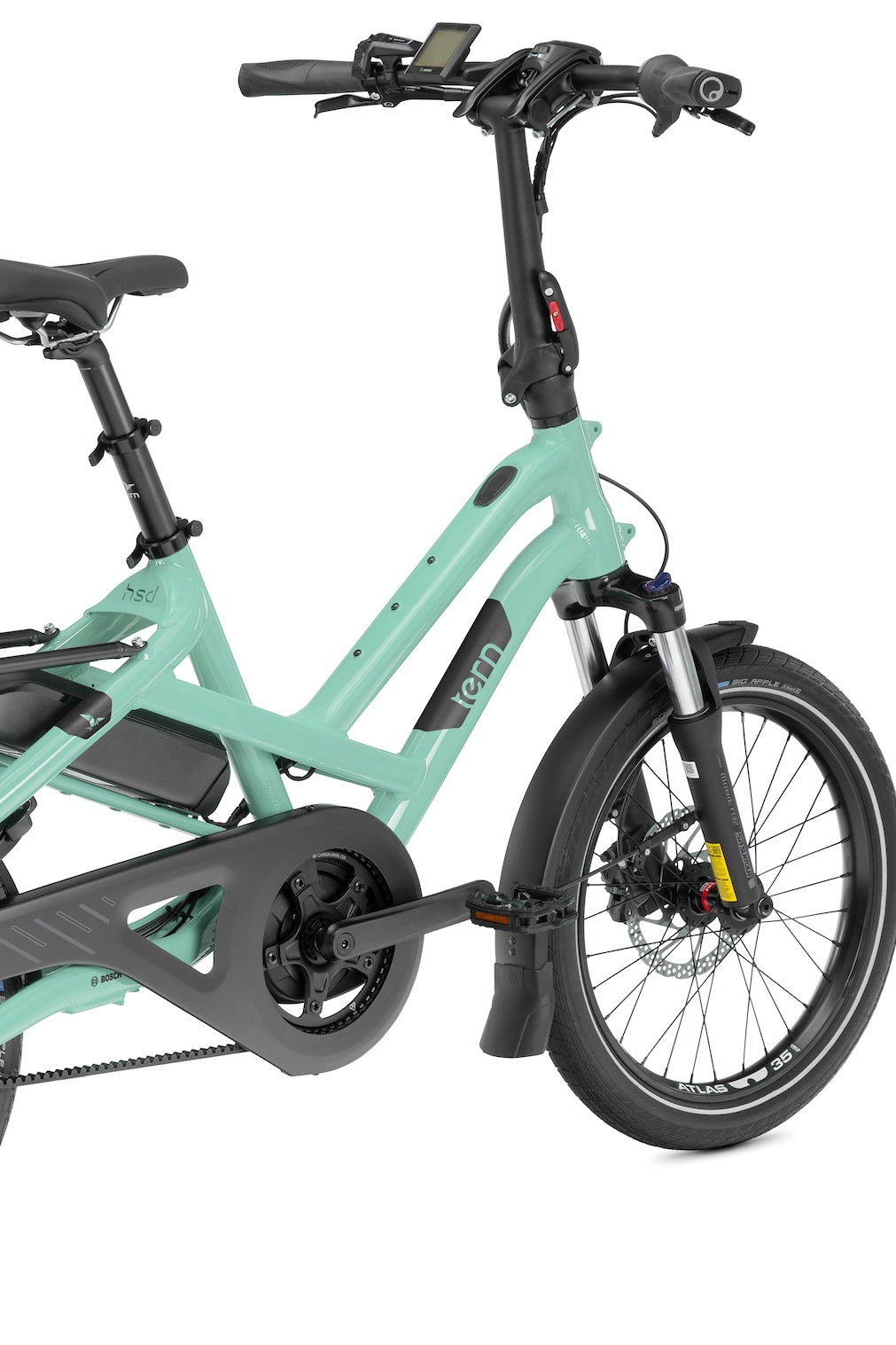
Tern HSD P5i
~$5,500 Tern HSD P5i Visit site → The no-compromise pick if budget and weight don't matter. Hits every performance box with a 75 Nm Bosch system, but costs more than the EV5 and is heavier and bulkier.
✓ Bosch battery ✓ Gates belt ✓ 75 Nm ✓ Hydraulic brakes ✓ Integrated lights ✗ Over 23 kg
For more info Understanding the eBike Market
12

Frequently asked

The questions buyers ask most.

Why are some eBikes so cheap?

Usually because of where cost has been cut: unbranded battery cells, cheaper motors, low-grade drivetrains, no integration, and minimal quality control. Some cuts are reasonable for casual use; others cost you more over the life of the bike, or compromise safety.

Is a cheap eBike safe?

It depends entirely on the battery. The fires reported in Australia almost always involve cheap, unbranded cells with no battery management system. A cheap bike with a properly certified battery (a named cell maker with an integrated BMS) can be safe. One with an unbranded, uncertified battery is a genuine risk.

How long should an eBike last?

A budget bike ridden daily might last two to three years before parts wear out. A well-built bike with a belt drive, sealed gearing and a quality battery can last a decade or more with minimal maintenance. Lifespan, not sticker price, is what determines real value.

Is it worth spending more than $2,000 on an eBike?

For occasional, casual use, a sub-$2,000 bike can be enough. For daily commuting, spending more on a quality battery, drivetrain and motor usually pays off, the bike lasts longer, needs less maintenance, and costs less per year over its life.

What's the cheapest eBike actually worth buying?

The cheapest bike worth buying is the one that still clears your own safety and quality bar: branded battery cells with a BMS, a known motor, durable build, and real support. Below that, the low price is usually a false economy. Above it, you can buy affordably with confidence.

Affordable is a measure of value, not price

The cheapest eBike and the best-value eBike are rarely the same bike.

Cheap is a number on day one. Value is what the bike costs you to own, ride and keep over the years that follow, and on that measure, a well-built bike at a fair price almost always wins. The Auren EV5 isn't the cheapest eBike in Australia. It's built to be the one you don't replace: premium components, near-zero maintenance, sold direct at a price the spec sheet has no business reaching.

$4,400 direct · European spec · Near-zero maintenance

0