The market, mapped
All eBike guides

The eBike market guide

The Australian eBike market, mapped.

The Australian eBike market grew more than 300% between 2022 and 2025, and the number of brands competing for a buyer’s attention has grown with it. Premium European marques, global cycling names, online value brands, local Australian builders and big-box retailers all sell something they call an eBike, at prices from a thousand dollars to well over ten thousand. Working out who’s who, and which one fits you, gets confusing fast.

This guide maps the market. It starts with the main categories of brand, how they differ on price, where they’re sold, where they come from and who they’re built for, then profiles individual brands against a scorecard so you can compare like with like. It closes with the trends reshaping the market in 2026, and the questions buyers ask most.

01

Understanding the Australian eBike market

Five kinds of brand.

Almost every eBike brand that sells in Australia falls into one of five broad groups. They differ on price, on how they're sold, on where they're built, and on the kind of rider they design for. Knowing which group a brand belongs to tells you most of what you need before you look at a single model.

Premium European brands.

Names like Riese & Müller, Moustache, Kalkhoff, Focus and Orbea. The top tier: best-in-class motors, built to last for years, strong compliance credentials, and prices from roughly $5,000 to $12,000 and beyond. Sold through specialist bike retailers. You're paying for genuine quality and a long retail and distribution chain.

Establishment cycling brands.

Trek, Giant, Specialized, Merida. Global household names with decades of trust and wide dealer networks across Australia. Reliable motor systems, established servicing, EN15194 compliant, generally $3,000 to $7,000. Designed around a cyclist's sensibility and sold mostly in-store.

Direct-to-consumer value brands.

Online-first names such as Rad Power, Reid, Aventon, Velectrix and Smartmotion. They sell direct, ship fast and price aggressively, roughly $1,500 to $3,500. The trade-off is variable quality, compliance that varies by model, and often little meaningful Australian after-sales support.

Australian-born brands.

Local builders like Auren and Bolzzen, typically priced in the mid range around $3,000 to $7,000. Good value for spec and no overseas support headaches, though brand recognition and range are still developing.

Big-box and mass-market retail.

Entry-level bikes through Anaconda, Harvey Norman, The Good Guys, Amazon and Kmart, roughly $500 to $1,500. Generic or unbranded battery cells, little specialist knowledge, minimal after-sales support, and EN15194 compliance often absent. Fine as a first toe in the water; rarely the bike that survives a daily commute for years.
02

Design orientation — cycling vs biking

Built to ride, or built to commute.

Beyond price and distribution, brands split on a quieter axis: what kind of riding they design for. It’s worth understanding because it shapes how a bike feels far more than the spec sheet suggests.

Cycling-oriented.

These brands design in the sporting tradition: lighter frames, a more athletic riding position, performance first. Think the American and road-cycling lineage. Excellent if you want to ride for fitness or distance; less suited to turning up to work in your clothes.

Biking-oriented.

These brands design in the everyday tradition: upright, comfortable, durable, built for commuting and errands in normal clothing. Think the Dutch city-bike lineage. Practical and low-fuss, not built for sport.

Both.

A few brands deliberately bridge the two: a bike comfortable and practical enough for the daily commute, but capable and refined enough to enjoy on a weekend ride. Auren designs to this brief.

03

The brands — compared on one scorecard

Each brand profiled against the same scorecard.

Every profile below uses the same six measures, so you can compare like with like across categories. Price ranges are indicative and move with models and sales. More brands to follow.

Premium European

~$5,000–$12,000+
Riese & MüllerThe benchmark for German engineering: heavy-duty, fully equipped bikes built as genuine car replacements, with cargo and touring options that lead the field.
Price rangeHigh — ~$7,000–$12,000+
DistributionSpecialist dealers
OriginGermany
Key categoriesCity, cargo, touring
Design orientationBiking — everyday, premium
Linkr-m.de
MoustacheA French marque with a strong design identity, pairing Bosch motors with comfortable, characterful frames across city, trekking and mountain ranges.
Price rangeHigh — ~$5,000–$9,000
DistributionSpecialist dealers
OriginFrance
Key categoriesCity, trekking, eMTB
Design orientationBoth — leans biking
KalkhoffA long-established German commuter and touring specialist, the accessible end of premium Europe, with solid Bosch-equipped builds and dealer support.
Price rangeMedium-high — from ~$4,000
DistributionSpecialist dealers
OriginGermany
Key categoriesCommuter, trekking
Design orientationBiking — everyday

Establishment cycling

~$3,000–$7,000
TrekOne of the biggest names in cycling, with polished eBikes across city, hybrid and mountain, and a dealer on most main streets.
Price rangeMedium-high — ~$3,000–$8,000
DistributionDealer network
OriginUSA
Key categoriesCity, hybrid, eMTB
Design orientationCycling — sporting lineage
GiantThe world's largest bike maker, offering dependable eBikes at sharper prices than most establishment rivals, backed by a wide Australian dealer base.
Price rangeMedium — ~$2,500–$6,000
DistributionDealer network
OriginTaiwan
Key categoriesCity, road, eMTB
Design orientationCycling — sporting lineage
SpecializedA premium global name whose Turbo Vado commuter range pairs refined motors with a proper app ecosystem and a large retail and service network.
Price rangeMedium-high — ~$4,500–$9,000
DistributionDealer network
OriginUSA
Key categoriesCommuter, road, eMTB
Design orientationCycling — sporting lineage
MeridaA major Taiwanese manufacturer with a broad, sensibly priced eBike range and reliable Shimano-equipped builds sold through Australian dealers.
Price rangeMedium — ~$3,000–$6,500
DistributionDealer network
OriginTaiwan
Key categoriesCity, trekking, eMTB
Design orientationCycling — sporting lineage

Direct-to-consumer value

~$1,500–$3,500
Rad PowerThe biggest name in online value eBikes, known for utility and cargo models at aggressive prices, with the thin local support typical of the tier.
Price rangeLow-medium — ~$1,800–$3,000
DistributionDirect-to-consumer (online)
OriginUSA
Key categoriesUtility, cargo, commuter
Design orientationBiking — utility-first
AventonAn online value brand with genuinely branded battery cells and light builds at low prices, one of the stronger spec sheets in the tier.
Price rangeLow-medium — ~$1,700–$3,000
DistributionOnline, via AU retailers
OriginUSA
Key categoriesCommuter, fitness
Design orientationCycling — value end
ReidA budget-friendly Australian-founded label with a broad range of affordable, mostly chain-driven eBikes, a common first eBike.
Price rangeLow — often under $2,500
DistributionOnline + retail stockists
OriginAustralia
Key categoriesCommuter, leisure
Design orientationBiking — entry everyday
SmartmotionA New Zealand-founded value brand with a long local presence across Australia and NZ, practical commuters at accessible prices.
Price rangeLow-medium — ~$2,000–$3,500
DistributionOnline + retail stockists
OriginNew Zealand
Key categoriesCommuter, utility
Design orientationBiking — everyday

Australian-born

~$3,000–$7,000
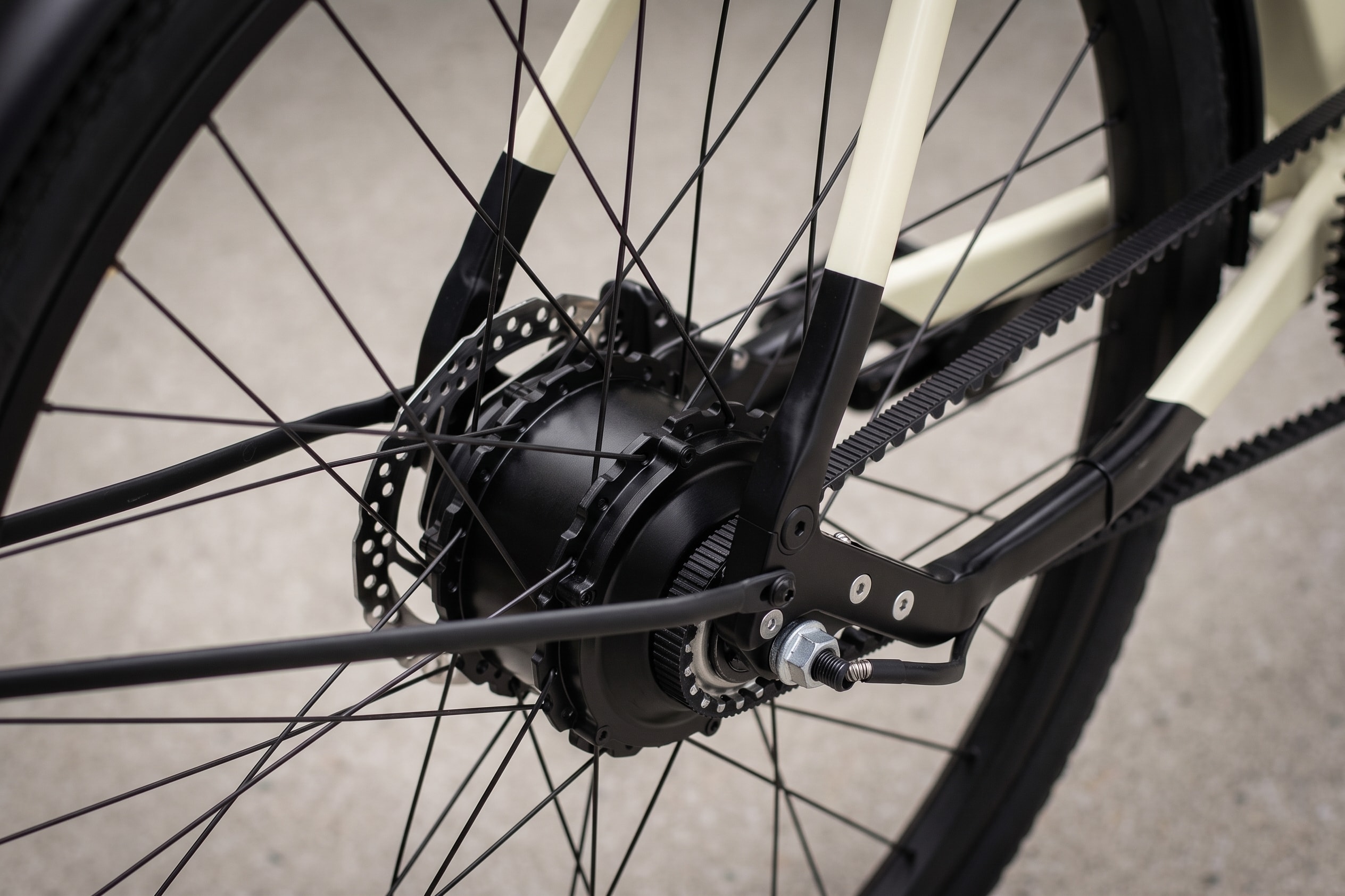
AurenAustralia's first integrated automatic eBike, built around one model: a Melbourne brand pairing automatic gearing with a carbon belt drive in a single low-maintenance commuter.
Price rangeMedium — $4,400
DistributionDirect-to-consumer (online)
OriginDesigned in Melbourne, manufactured in China
Key categoriesCommuter
Design orientationBoth — commuting and weekend riding
BolzzenA Queensland-based builder with a broad range spanning commuters, fat-tyre and cargo models, local stock and support without the import wait.
Price rangeLow-medium — ~$2,000–$5,000
DistributionOnline + showroom
OriginAustralia (Queensland)
Key categoriesCommuter, fat-tyre, cargo
Design orientationBiking — utility-leaning
05

Frequently asked

The questions buyers ask most.

What are the main types of eBike brand in Australia?

Five broad groups: premium European brands (Riese & Müller, Moustache, Kalkhoff), establishment cycling brands (Trek, Giant, Specialized), direct-to-consumer value brands (Rad Power, Aventon, Smartmotion), Australian-born brands (Auren, Bolzzen and others), and big-box retail (Harvey Norman, Anaconda, Amazon). They differ mainly on price, where they’re sold, and the kind of rider they’re built for.

How much does a good eBike cost in Australia?

Big-box bikes run $500 to $1,500, online value and Australian brands roughly $1,500 to $4,000, establishment cycling brands $3,000 to $7,000, and premium European brands $5,000 to $12,000 and up. The better question is value over the life of the bike, a well-built one costs more upfront and far less to maintain than a cheap one that needs constant attention.

What's the difference between buying an eBike online and in a shop?

A shop lets you test ride and gives you a local service point, usually at a higher price. Buying direct online is cheaper and increasingly common; premium European brands are dealer-only, while value and Australian-born brands are mostly online. The key questions for an online purchase are whether you can try it, whether it’s compliant, and who you reach for support.

Are cheap eBikes worth it?

It depends on use. A big-box bike under $1,500 is fine for occasional, flat, casual riding, but the trade-offs, generic battery cells, little support, often no EN15194 compliance, make it a poor choice for a daily commute. Many buyers in this tier end up upgrading once they realise how much they ride. For regular use, the mid tiers offer better value over time.

What does EN15194 mean and why does it matter?

EN15194 is the European safety standard for eBikes, used as the benchmark in Australia and now mandatory for sales in NSW. It covers the motor, battery, braking and electrical systems together. A bike certified to it has been tested against a recognised standard rather than just assembled to a price, the clearest single signal that a bike is built and wired properly.

Putting it together

The market, narrowed down.

The Australian market gives you real choice: premium European quality at a premium price, established names with dealer networks, aggressive online value, local builders, and entry-level big-box bikes. Which is right comes down to your budget, how you ride, and how much support you want behind the purchase. Auren sits in the accessible-premium corner of that map: an Australian brand, sold direct, built around a single low-maintenance commuter, and the only automatic eBike in the country under $5,000.

Automatic gearing · Carbon belt drive · $4,400 direct

0