Guide contents
All titanium guides

The ultimate T47 bottom bracket guide

T47, the technical and how to use it.

The bottom bracket is the part that holds your cranks to your frame — small, hidden, and the source of more creaks, headaches and forum arguments than almost anything else on a bike. T47 is the standard that set out to fix that.

This guide explains what it is, how it compares to the old BSA standard, how to choose the right one for your frame and cranks, and the one tooling catch worth knowing before you buy. On a custom build, the bottom-bracket standard is a decision made deliberately — and T47 is, more often than not, the right one.

01

What T47 is, and why it exists

A threaded bottom bracket, built big.

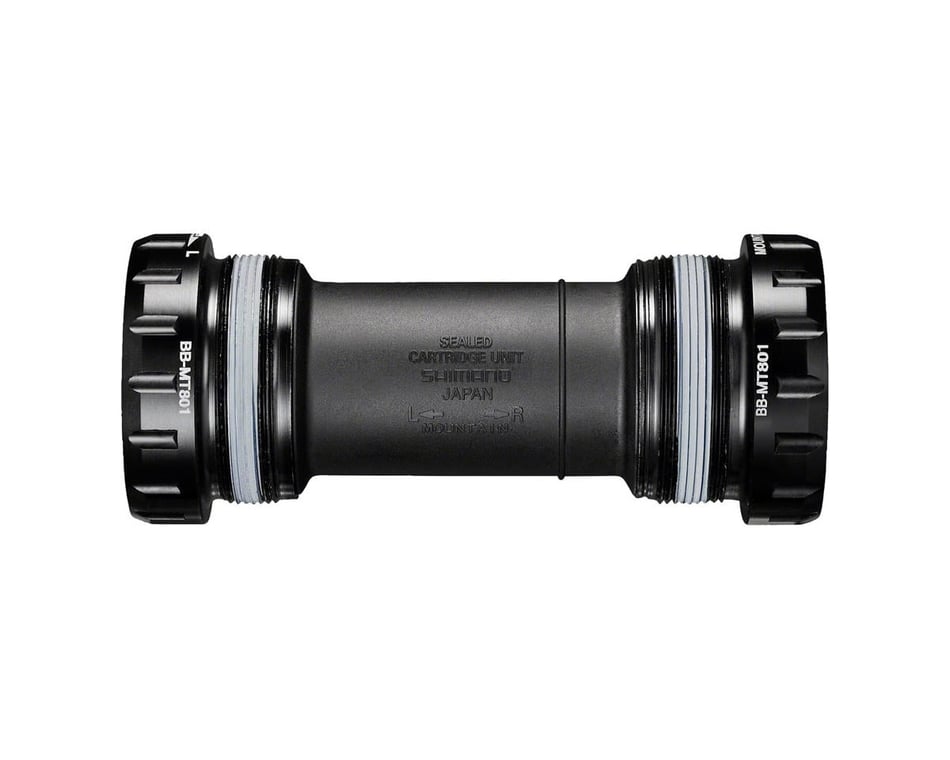
T47 was conceived in 2015 to solve one specific, maddening problem: press-fit creak. Press-fit bottom brackets push the bearings directly into the frame shell, and over time that interface can loosen, move and creak — the bane of many a modern bike. T47 was a collaboration between several builders — including Chris King, Argonaut, White Industries and Engin — to combine the easy serviceability of a threaded shell with the size advantages of the wider press-fit shells.

The idea is neat: take the 46mm internal diameter of a PF30 press-fit shell and cut a thread into it (officially M47 × 1.0mm), so the bearing cups thread in rather than press in. You get the big shell and the reliable threaded interface.

The name

The “T” stands for <em>threaded</em>; the “47” is the nominal 47mm outside diameter of the cup thread.

It's threaded into a press-fit size

T47 is essentially a PF30 shell with threads cut into it — that's the whole trick.

The threading direction matches BSA, and it's counterintuitive

The drive-side cup is a left-hand thread; the non-drive side is a right-hand thread. This is deliberate: it means your pedalling forces <em>tighten</em> the cups rather than working them loose.
02

T47 vs BSA

The same threaded principle, gone bigger.

BSA (also called English or ISO threaded) is the long-standing threaded standard — a 68/73mm shell, a 1.37-inch internal diameter, and 1.37″ × 24 TPI threads. It’s reliable and serviceable, which is why it never really went away. T47 keeps the threaded principle but builds it around the much larger 46mm shell.

The single most important comparison is wall thickness with a fat 30mm crank spindle — it’s what makes the “bigger is better” argument concrete rather than hand-wavy.

BSAT47
Shell internal diameter ~34.8mm (1.37″) 46mm
Thread 1.37″ × 24 TPI M47 × 1.0mm
Shell widths 68 / 73mm 68, 73, 85.5, 86, 86.5mm
Wall thickness with a 24mm axle ~5.5mm (ideal) Ample
Wall thickness with a 30mm axle ~2.5mm (severely restricted) ~6mm (almost the same as BSA had with 24mm)
Bearing size Smaller Larger — 42mm internal sealed bearing OD (2mm more than a traditional outboard bearing)
Internal cable / wire routing room Tight Generous
Bottom bracket weight Lighter (~95g BB86 / ~130g PF30 for reference) ~180g
Serviceability Threaded — easy Threaded — easy

Why that one row matters: BSA’s geometry is ideal for a 24mm axle (around 5.5mm of wall) but chokes a 30mm axle, leaving only ~2.5mm of wall. T47 gives a 30mm spindle about 6mm of wall — almost exactly what BSA only ever managed with a skinny 24mm spindle. That’s the real “why”: T47 lets a frame run fat, stiff 30mm spindles and keep the structural margin BSA couldn’t.

BSA
T47

The benefits, plainly

A bigger, stiffer BB junction

The 46mm shell with no width limit gives the builder a large platform to build the bottom-bracket area — more weld/bond area, room for bigger frame tubes, a stiffer junction.

Bigger, more durable bearings

The extra 11.2mm of diameter allows larger bearings (a 42mm internal-bearing OD), which last longer.

Room for internal routing

The wider aperture leaves clearance for internally-routed cables and hoses to pass without fouling the BB sleeve.

An open standard

Any frame or component maker can adopt T47 without restriction.

Easy service, no ovalisation

The threaded interface avoids the repeated pressing that can ovalise a press-fit shell over its life.

The trade-offs

Weight. A typical T47 BB is around 180g, heavier than press-fit (95g for BB86, 130g for PF30). On some frame constructions there’s also an aluminium insert/sleeve adding 100g on the frame side, but that’s a frame-build detail, not the BB’s headline weight. Friction. A T47-to-Shimano setup has marginally worse frictional loss than BSA-to-Shimano, mostly through the bearings. Minor, but it’s the one place BSA wins. Not universal. While some adapters are available to reduce BB shells to a smaller standard, a frame has to be built with a T47 shell; it isn’t interchangeable with BSA or press-fit, which is exactly why it’s a decision made at the frame-design stage.

03

How to choose the right T47 for your frame and cranks

Two variables, one clear path.

This is where T47 gets genuinely confusing in the wild — but it comes down to just two independent variables: shell width (a property of your frame) and spindle diameter (a property of your cranks). Get those two right and everything else follows.

Internal vs external — and how shell width decides it. This is the single most misunderstood point, so here it is plainly: internal and external refer to where the bearings sit, and your frame’s shell width forces the choice.

68 / 73mm 85.5 – 86.5mm

External — bearings sit outboard of a narrow 68/73mm shell. Internal — bearings sit inboard, inside a wide 85.5/86/86.5mm shell.

So the rule of thumb: a 68/73mm shell needs an external-type T47 (unless you’re running BB30/PF30-style 30mm cranks, in which case internal); an 85.5–86.5mm shell needs an internal-type T47. The frame decides this, not the cranks — which is why “just measure your shell” is the right first step.

1. Start with your crankset

What spindle does it use — 30mm, 29mm DUB, 24mm, or 22/24mm GXP?

2. Choose the bearing/cup that matches that spindle

T47's whole flexibility is that one shell standard accepts essentially every modern crank via the right cup.

3. Match it to your shell width

Which sets internal vs external. In short: the frame sets internal/external; the cranks set the spindle and bearing.

24mm

Shimano Hollowtech II, FSA, RaceFace. The long-standing standard — lightest, most widely available, and easiest to install because the spindle is slimmer. Best for: most riders, easy service, wide compatibility.

28.99mm / 29mm

SRAM DUB. Sits between 24mm and 30mm, letting SRAM run one spindle standard across road, gravel and MTB while keeping things light and stiff. Best for: anyone on a modern SRAM build.

30mm

White Industries, ROTOR and similar. The stiffest and lightest spindle — but it needs the full T47 internal-diameter advantage to run with adequate bearing size. Best for: stiffness-chasers — the reason T47 exists.

22/24mm GXP

Older SRAM. Still supported via specific cups. Best for: keeping an older SRAM crank running.

Spacers do two different jobs, and conflating them is a common source of confusion, so keep them separate.

Frame side — BB-side / sleeve spacing

Handles shell-width variation — adjustable-width sleeves cover a range (e.g. 68–73mm), so one external BB can fit both road and MTB shells.

Crank side — spindle-side spacers

Sit between the BB seal and the crank arm to set chainline and take up lateral play. The details differ by spindle — a 24mm kit typically includes a steel wavy washer for preload, a 29mm DUB kit drops it, and a 30mm kit uses a 30mm wavy washer. That preload detail is <strong>why</strong> the spacer kit changes with the spindle.

You can also adapt across sizes: a 24mm adapter (30mm outer diameter, 24mm inner) can be added to a 30mm BB to run a narrower crank.

04

The tooling reality

The one thing to check before you buy.

T47’s weakest spot isn’t the standard itself — it’s that the tools aren’t standardised across brands. The threaded concept is simple to service, but notch counts and diameters vary, so the tool that fits one brand’s T47 may not fit another’s.

Even Park Tool makes multiple T47 tools

The interfaces vary — different notch counts (12 vs 16) and outside diameters across Enduro, Chris King and other brands.

The wide internal-T47 variant has a genuine grip problem

On some 85.5–86.5mm versions the tool flange offers only ~2mm of surface to grip, so the tool has to be held perfectly square or it can slip and strip.

Riders report real-world grief

It's not unusual to read accounts of a rider whose shop had nine different T47 tools, none of which fitted their frame's BB — ending in the BB being ground out and replaced with one that takes a standard tool.

The practical upside: some brands deliberately design for standard spline tools (for example, the common 44-16 and 46-12 spline interfaces) so no proprietary tool is needed.

What to look for

Identify the tool before you buy. Find out which tool your bottom bracket needs before you commit, and make sure you can get or have it. This might save you grief down the track.

05

Variants worth knowing

A couple of footnotes, so nothing surprises you.

Two quick things round out the picture:

Asymmetric T47 (T47a / “BBrighT-47”) exists

Brands like Factor, Felt and Cervélo use a version where the left cup is internal-type and the right (drive) side is external-type. Trek runs a slightly narrower 85.5mm shell. You don't need to go deep — just know the variants are out there so a “well, actually” doesn't catch you out.

T47 has gone mainstream

It started in the boutique custom world but now appears on mainstream brands including Trek, Factor and Felt — a sign the standard has real staying power, not just niche appeal.

An Auren T47 fitted with crank and chainring.
06

The bottom bracket on a custom build

A decision made with you, not handed down by a frame.

On an off-the-shelf bike, the bottom-bracket standard is whatever the frame came with, good or bad. On a custom titanium build, it’s a deliberate choice made at the design stage. For most builds the answer is T47: threaded so it won’t creak, large enough to run any modern crank and route cables cleanly, serviceable anywhere in the world, and built into a stiff, generous BB junction. It’s the standard that quietly makes the rest of the bike better, and exactly the kind of decision Will talks through with every rider.

A rider on an Auren custom titanium build.
Want to explore this further? Check out this Auren guide. The Pinion Gearbox Guide
07

The questions riders actually ask

Common T47 questions, answered.

Is T47 better than BSA?

For most modern builds, yes — especially if you want a stiff 30mm crank spindle. T47 gives a 30mm axle around 6mm of wall thickness, where BSA leaves only ~2.5mm. T47 also allows bigger bearings and room for internal cable routing. BSA’s one genuine win is slightly lower friction and lower weight. Both are threaded and easy to service, which is what matters most for long-term reliability.

Can I convert my BSA frame to T47?

No. The shell is built into the frame, so a frame is either BSA or T47 from the start — you can’t convert one to the other. It’s one of the reasons the BB standard is a frame-design decision, not an afterthought.

Why is my T47 creaking if threaded BBs aren't supposed to?

Threaded BBs creak far less than press-fit, but a creak usually means a cup wasn’t installed with the right prep or torque. First check the cups are tight. If they are, remove, clean threads, proper grease or antiseize, correct torque, and a faced (flat) shell. Because T47 threads in, the fix is usually straightforward: remove, clean, prep and reinstall. If that doesn’t work, check the bearings.

What tool do I need for a T47?

It depends entirely on the brand — notch counts and diameters vary, and even Park Tool makes several T47 tools. Identify the specific tool your BB needs before you buy, and favour brands that use a standard spline interface so you’re not hunting for a proprietary tool later.

Is T47 heavier than other standards?

Slightly. A typical T47 BB is around 180g, versus roughly 95g for BB86 and 130g for PF30. On some frames there’s also a small frame-side sleeve. For most riders the durability, serviceability and stiffness are well worth a few extra grams.

Built deliberately

The standard that quietly makes the rest of the bike better.

On a custom titanium build the bottom bracket isn't inherited — it's chosen. Threaded so it won't creak, sized to run any modern crank and route cables cleanly, and serviceable anywhere in the world. Will talks every build through one-on-one, so the standard at the heart of your bike is a decision, not an accident.

0