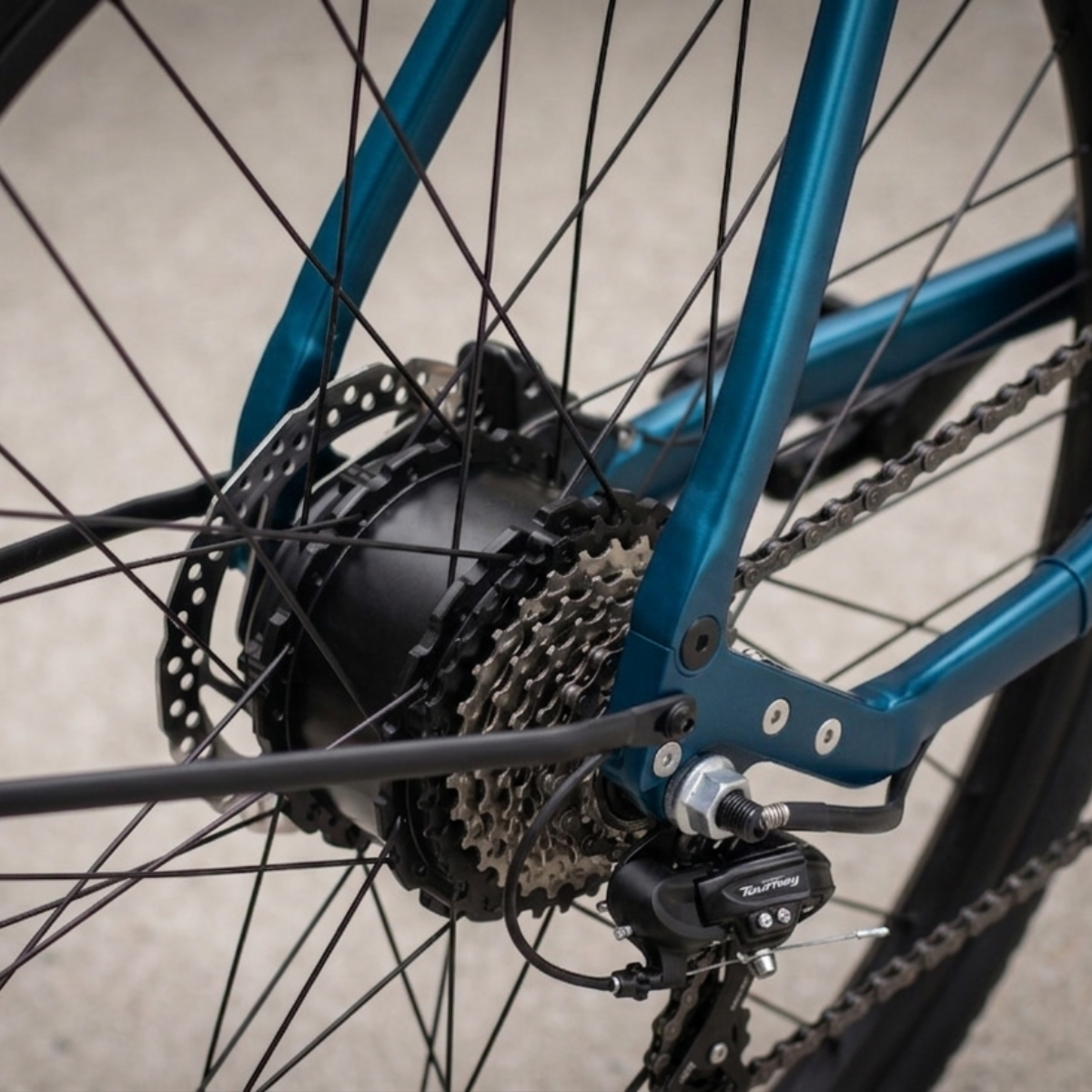
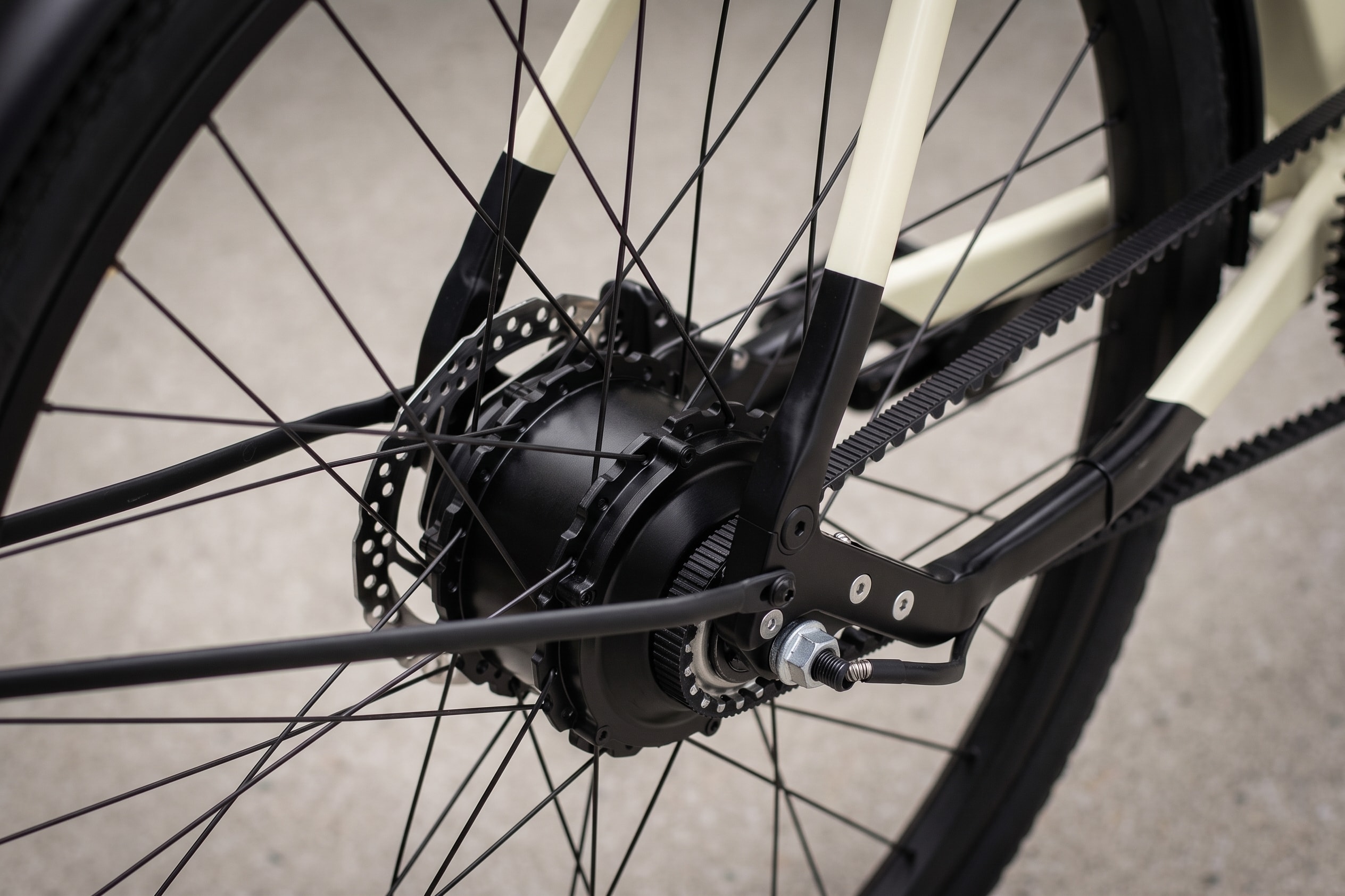
The basics — what it actually is
A belt instead of a chain.
A belt drive replaces the metal chain with a reinforced rubber belt, similar in concept to a timing belt inside a car engine. The belt runs between a front sprocket at the pedals and a rear sprocket at the wheel, transmitting your pedalling force the same way a chain does, but without the need for lubrication or the stretching that comes with metal-on-metal contact.
The belts used on bicycles — most commonly made by Gates or Michelin — are reinforced with carbon fibre or aramid fibres. They’re engineered for a long service life, low noise and consistent tension, and are designed to run dry, meaning no oil, ever.
Because the belt can’t be split and rejoined like a chain, it has to be threaded through a gap in the frame when fitting or replacing it. This is why belt drive bikes always have a frame with a specific opening, usually in the right-side chainstay, that allows the belt to be slipped on and off.