
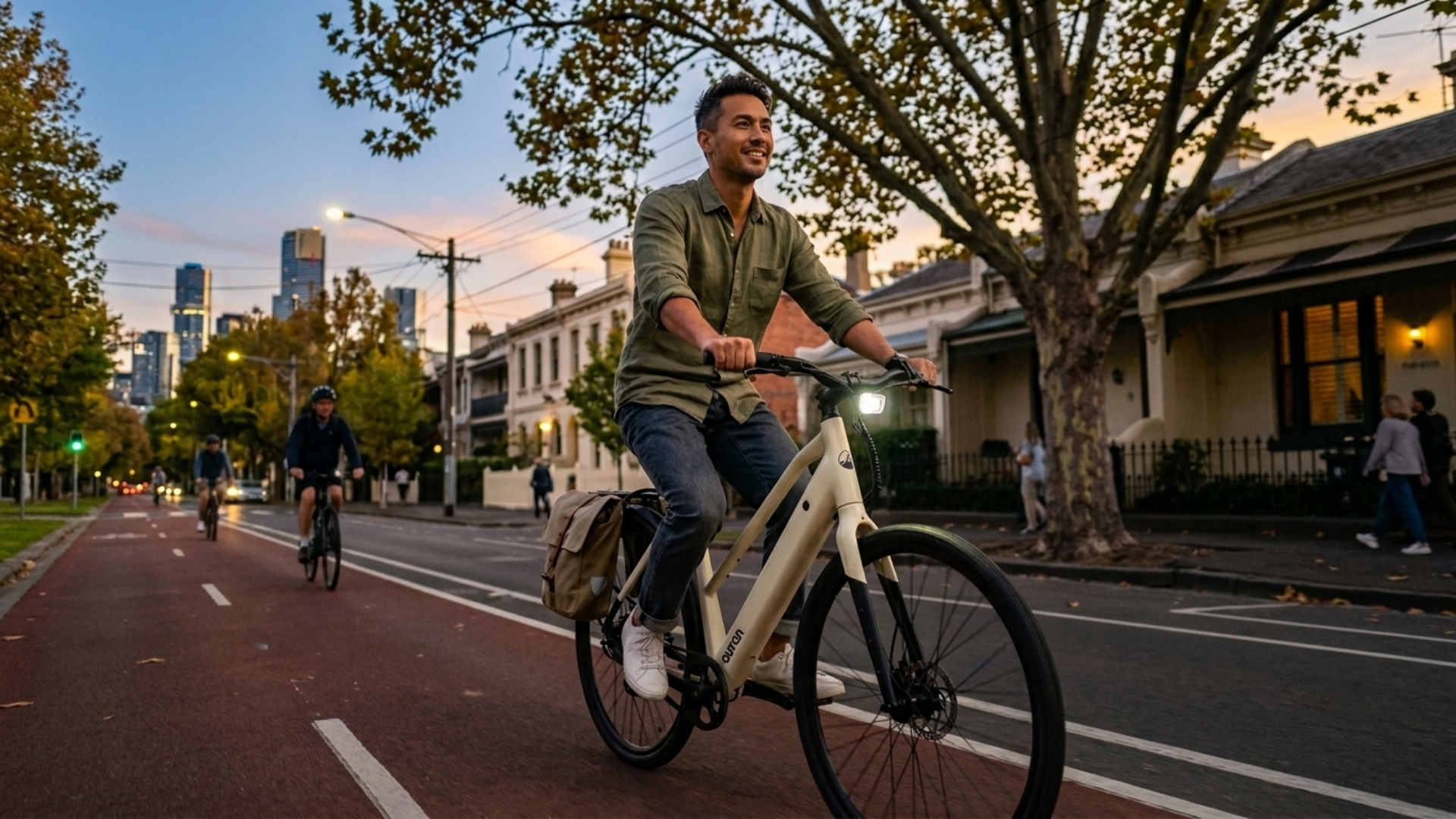
Understanding automatic eBikes
All eBike guides

The automatic eBike guide

The bike that shifts for you.

Automatic e-bikes were introduced around 2022, and they’re the new arrival on the block, a small category, but a steadily growing one. They offer a genuinely different experience to a manual eBike: instead of choosing and changing gears yourself, the bike reads how fast you’re going and how hard you’re working, and selects the right gear for you.

Because it’s new, the category isn’t well understood yet. This guide explains what an automatic eBike actually is, when the technology arrived, and how it feels to ride compared with a normal geared bike. It covers what it means for maintenance, who gets the most out of it, whether you still control your effort, how the price compares, the four main systems on the market, then the automatic eBikes you can actually buy in Australia today.

01

The basics — what it actually is

No shifting. No thinking about gears.

An automatic eBike chooses your gear for you. Sensors track your speed, your pedalling cadence and how much force you’re putting through the pedals, and the bike continuously selects the right gear to match: uphill, downhill, pulling away from lights, holding pace on the flat. You never touch a shifter, because there usually isn’t one.

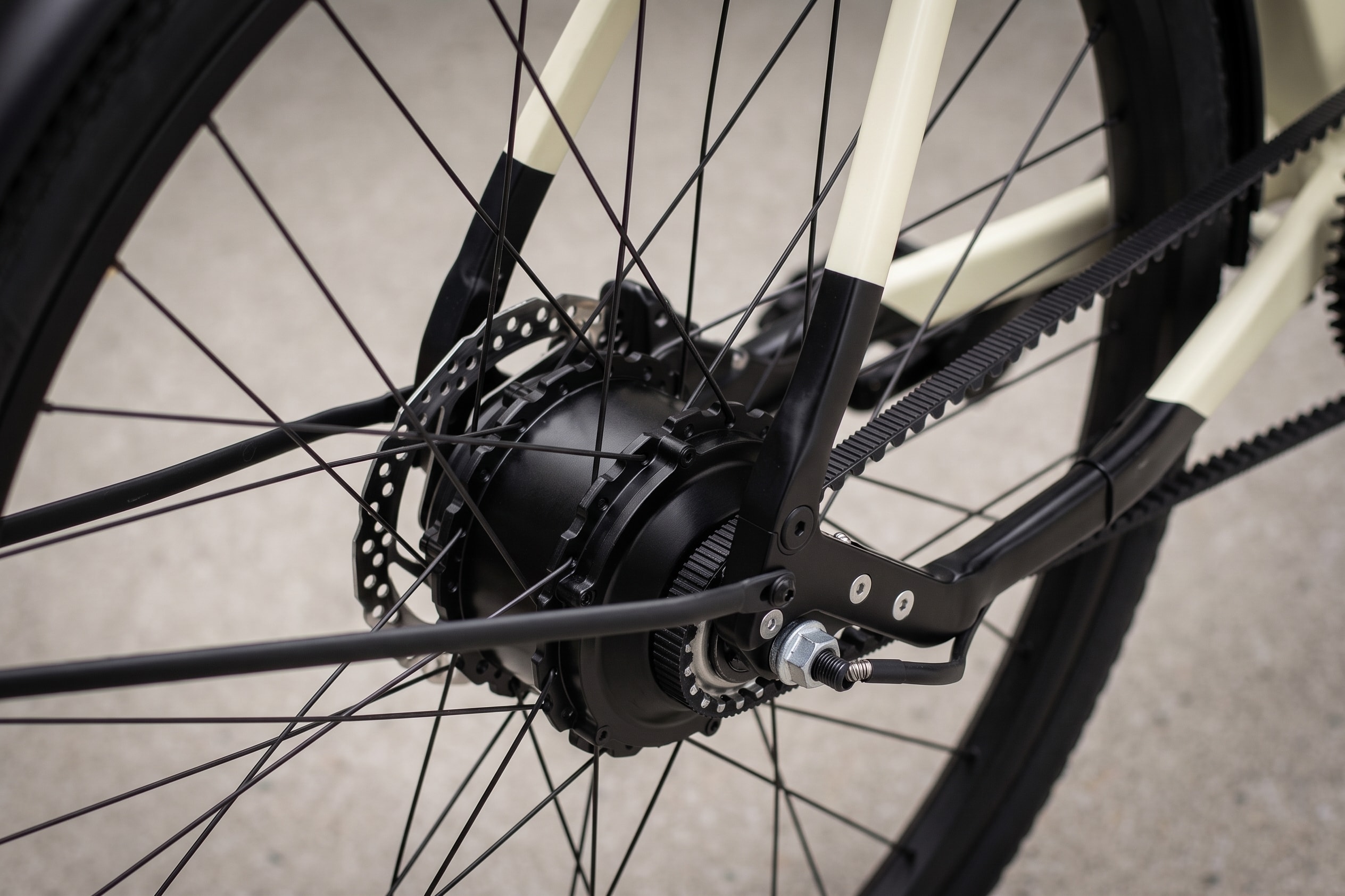
This generally works with sealed gearing, an internal gear hub or an integrated gearbox built into the motor, rather than the exposed chain-and-derailleur setup on most bikes. A derailleur shifts by guiding the chain sideways across a stack of cogs, which Shimano has recently brought to automatic with its AutoShift technology. Sealed systems, though, can shift under load and even while you’re stopped, which a derailleur can’t do.

The result is a bike you simply get on and ride. The gearing disappears into the background, the same way an automatic gearbox disappears in a car.
02

The timeline — how new this is

Newer than you'd think, and arriving fast.

The building blocks have been around for a while. Internal gear hubs date back over a century, and continuously variable bike hubs have existed since the 2000s. What’s new is the electronics that turn those sealed systems fully automatic, sensing your riding and shifting without you.

Enviolo added automatic electronic control to its continuously variable hub with the AutomatiQ system, and Shimano brought automatic shifting to eBike derailleurs through its Di2 Auto Shift mode. More recently, motor makers have built shifting straight into the drive unit: Bafang’s GVT gearbox-motors introduced basic mechanical automatic shifting, and Ananda’s R900 gearbox-motor uses electric sensing for integrated automatic shifting and a premium rider experience.

So while the idea isn’t brand new, automatic eBikes as a real, buyable category are only a few years old, which is why most people haven’t ridden one yet.

03

How it feels — three ways to shift

The difference you feel from the first ride.

The easiest way to understand automatic is to feel the gap between it and what most people already ride. There are three experiences worth comparing: a conventional chain and derailleur, an internal gear hub, and full automatic.

The default A conventional chain and derailleur

This is what most bikes have, and what most people picture when they think “gears”. A lever moves the chain across a stack of cogs at the back wheel. It works, and a well-tuned one shifts crisply, but it asks something of you on every ride.

You have to pick the right gear and shift in time, which can mean mis-shifts: the clunk of catching the wrong gear, or grinding up a hill in a gear that’s too hard because you left it too late. Chains can drop off the cogs at the worst moment. And the system drifts out of tune, cables stretch, the derailleur needs adjustment, and shifting gets vaguer until it’s serviced.

There’s a specific problem on some eBikes too. A derailleur will only shift while you’re pedalling, and on a mid-drive eBike the motor is driving the chain at the same time. Shift under that load and you put the whole drivetrain under strain, so you learn to ease off the pedals at exactly the moment you’d rather not, pulling away on a hill, accelerating through a junction.

The calmer middle An internal gear hub

An internal gear hub seals all the gearing inside the rear hub instead of hanging it out in the weather. You still shift yourself, usually with a twist grip or a button, but the experience is calmer.

There’s far less to adjust and maintain, because the moving parts are sealed away from grit, water and knocks. You can shift while stopped or coasting, no need to be pedalling, so you can drop into an easy gear while waiting at a red light and pull away cleanly. And because it’s enclosed, it shrugs off wet weather that would wear an exposed chain and derailleur. It’s a real step up in fuss for a daily rider, even before anything becomes automatic.

The hands-off ride The automatic experience

Automatic takes a sealed system and removes the last job you had left: choosing the gear.

You get everything the internal hub already gives you, low maintenance, shifting at a standstill, sealed from the weather, and on top of it, the bike does the selecting. Sensors read your speed, cadence and pedal force and keep you in the right gear continuously, with no input. There’s no gear to choose, no shift to time, no wrong gear at the lights. Stop, and it drops you back to an easy take-off gear automatically, so you always pull away comfortably.

For most riders this is the moment it clicks, you stop managing the bike and just ride it. The one honest downside: if you’re someone who enjoys choosing your own gears and feeling in command of the drivetrain, handing that over can feel like a loss of control at first. Most people stop noticing within a ride or two; a few genuinely prefer to shift themselves, and that’s fair.

04

Understanding maintenance

Nothing to tune, nothing to snap.

Manual gears, whether on a derailleur or a manually shifted hub, run on cables. Cables stretch and wear over time, which is why shifting drifts out of tune and eventually why a cable can fray or break and leave you stuck in one gear. A fully automatic system shifts electronically, so there are no gear cables to stretch, service or replace.

It also simplifies the bike itself. With no manual shifting, there’s no shifter or twist grip cluttering the handlebars, just a simple, uncluttered cockpit. Less to adjust, less to go wrong, and less between you and the ride.

05

Who it's for — the strongest fit

Built for everyone, perfect for some.

An automatic eBike works for anyone, but a few riders get an outsized benefit from it.

People who don't think of themselves as cyclists.

Gears are the part of cycling that intimidates newcomers most, and automatic removes it entirely. If you've avoided bikes because the mechanics felt fiddly or off-putting, this is the version that just works.

Commuters who want a bike they can rely on.

When you depend on a bike to get to work every day, the last thing you want is a drivetrain that needs constant attention or catches you in the wrong gear in traffic. Automatic keeps you in the right gear and the maintenance low.

Anyone who wants a simple, smooth ride.

Plenty of experienced riders choose automatic not because they can't shift, but because they'd rather not. It removes a small, constant task they didn't realise was taking attention.

Who it's not for.

People who like to retain full control and select their gear based on feeling rather than measurable metrics.

06

Understanding assist levels

Automatic gears, your effort.

A common question is whether automatic means the bike controls how hard you work. It doesn’t. The gears adjust to keep your pedalling feeling comfortable, that’s all. What actually controls your effort is the assist mode you select and how fast you want to go.

Take the Auren EV5. It has three modes: Eco, Sport and Boost. Eco is for extending your range and burning more calories, you put in more work, the motor does less. Boost gives you maximum assistance, so you get to your destination faster with less effort. Sport sits in between.

You pick the mode that fits your ride, and the automatic gearing does the rest, keeping you in the right gear for your speed and the terrain, whatever mode you’re in. It’s a cleaner way to think about it than conventional eBike gearing, where you’re managing both the motor assist and the gear you’re in. With automatic, you have one thing to set and the bike handles the other.

Want to explore this further? Check out this Auren guide. Health Benefits of Cycling
The market

What automatic costs, the four systems, and the bikes you can buy.

07

Cost vs. manual

Options at each price point.

Automatic is a young category with few options, so pricing is spread wide. In Australia, automatic eBikes run from roughly $3,000 at the accessible end to around $8,000 for premium European builds.

The spread comes down to the system, the rest of the bike around it, and the brand. A premium European bike with an automatic hub carries the same premium its non-automatic siblings do; an accessibly priced direct-to-consumer bike can deliver genuine automatic gearing for far less. As with belt drive, automatic used to be the preserve of expensive bikes and is steadily becoming available at sensible prices, so the best value in the category sits with the bikes bringing automatic down to a reasonable price without thinning out the rest of the spec.

Want to explore this further? Check out this Auren guide. Understanding the eBike Market
08

The four automatic gearing manufacturers

Enviolo, Bafang, Ananda, Shimano.

Four systems account for almost every automatic eBike on the market. Three are sealed and shifter-free; one automates a conventional drivetrain.

Enviolo AutomatiQ.

A continuously variable hub (CVT) with electronic automatic control. Instead of fixed gears it has a continuous range of ratios, so there are no steps and no clicks, it glides between ratios to hold your chosen cadence. Sealed in the rear hub, low maintenance, and able to shift under load and at a standstill. The longest-established automatic option, common on premium European city bikes, usually paired with a belt drive.

Bafang GVT.

An automatic gearbox built into the hub motor, with three gears that shift on speed, no rider input. The GVT relies on inertia and springs, mechanically shifting up and down based on your wheel speed and pedalling effort. An entry-level system that makes automatic shifting accessible.

Ananda R900.

A combined gearbox-and-motor in one sealed unit, electrically shifting automatically on speed and load. This system can execute a shift in 0.2 seconds and uses high-tech sensing to create a smooth, natural-feeling ride.

Shimano Auto Shift Di2.

The odd one out, it automates a conventional chain and derailleur rather than a sealed hub. Shimano's electronic Di2 system moves the derailleur for you, shifting on speed and cadence, with manual override on tap. It brings hands-off shifting to chain-drive eBikes, but keeps the chain and derailleur, so it doesn't deliver the sealed, low-maintenance, belt-compatible benefits of the hub and gearbox systems. Mostly found on eMTBs and performance eBikes.

The broad split: Enviolo, Bafang and Ananda are sealed systems that pair with a belt and need little upkeep; Shimano Auto Shift is clever automation layered onto a traditional drivetrain.

09

The market — what you can buy here

The automatic eBikes you can ride today.

The category is small enough in Australia to survey almost completely. Three bikes show the range, from premium European down to accessible direct-to-consumer, one for each of the main sealed systems.

Riese & Müller Swing4 Automatic Premium European · Enviolo AutomatiQ ~$6,600–$7,800

The premium end. A classic European step-through roadster with a Bosch motor, Gates belt drive and the Enviolo AutomatiQ continuously variable hub for fully automatic shifting. Beautifully made and well supported through Australian dealers, with the price to match, around $6,600 to $7,800 depending on spec. The natural choice if you want automatic on an established premium brand and don't mind paying for it.

Horacio Serenio Step-Through DTC mid-range · Bafang GVT ~$1,800

A direct-to-consumer mid-range option pairing a Gates belt drive with the Bafang GVT automatic gear hub, a 504Wh Samsung battery, in a light 24 kg build. Sold online at around $1,800, it's the most affordable way into automatic on this list, a sensible entry point if budget is the priority.

Auren EV5 DTC · Australian · Ananda R900 $4,400

The Melbourne brand's single commuter model, built around the Ananda R900 automatic gearbox-motor paired with a Michelin carbon belt drive rated past 30,000 km, a Samsung 500Wh battery with BMS, Shimano hydraulic disc brakes, and integrated lights and mudguards. Sold direct at $4,400 with support handled personally by the founder. It sits between the two: genuine automatic gearing and a premium-feeling spec, without the European price tag.

What separates these is mostly the system, the spec around it and the price. All three pair automatic gearing with a belt drive, the combination that makes the most of a low-maintenance, hands-off ride.

10

Frequently asked

The questions buyers ask most.

What is an automatic eBike?

An automatic eBike chooses your gear for you. Sensors read your speed, cadence and pedal force, and the bike continuously shifts to the right gear with no input from you, no shifter, no learning curve, no wrong gear at the lights. It works through a sealed internal hub or an integrated gearbox-motor rather than an exposed chain and derailleur.

How does automatic shifting work on an eBike?

The system continuously measures how fast you’re going, how fast you’re pedalling, and how hard you’re pushing, then selects the gear that keeps your pedalling at a comfortable cadence. It shifts electronically, so it can change gear under load and even while you’re stationary, which is what lets it drop you into an easy take-off gear every time you stop.

Do you still pedal an automatic eBike?

Yes. Automatic refers only to the gears, not the pedalling. You pedal as normal and the motor assists; the bike just handles gear selection so you never have to shift. Pedal harder and it gears up; ease off and it gears down.

Can you control your effort on an automatic eBike?

Yes. Automatic gearing keeps your cadence steady but leaves effort entirely up to you, pedal harder to go faster, ease off to slow down. If you want the ride easier or harder overall, you adjust the motor’s assist level on the display. The gears manage themselves while you set the pace.

What are the advantages of an automatic eBike?

No shifting and no learning curve, the right gear every time including pulling away from lights, no mis-shifts or dropped chains, and a clean cockpit with no shifter. The sealed systems also mean no gear cables to stretch or break and very little maintenance. For commuters and newer riders especially, it removes the most intimidating and fiddly part of cycling.

The verdict

The last thing about cycling with a learning curve, gone.

Automatic is doing for the bike what it once did for the car: removing the one part that made it feel like work. No shifting, no mis-timed gears, no wrong gear at the lights, just a bike you get on and ride. The category is still young and the options are few, but the experience is the kind you can't unfeel once you've had it. The Auren EV5 is built around exactly this: the Ananda R900 automatic gearbox-motor, paired with a Michelin carbon belt drive, in one sealed, low-maintenance unit that shifts for you and asks almost nothing of you afterwards.

Ananda R900 automatic · Carbon belt drive · $4,400 direct

0