 Written by Will, Auren Founder and Engineer

How the two motor types compare
Where the motor sits, and what that changes.
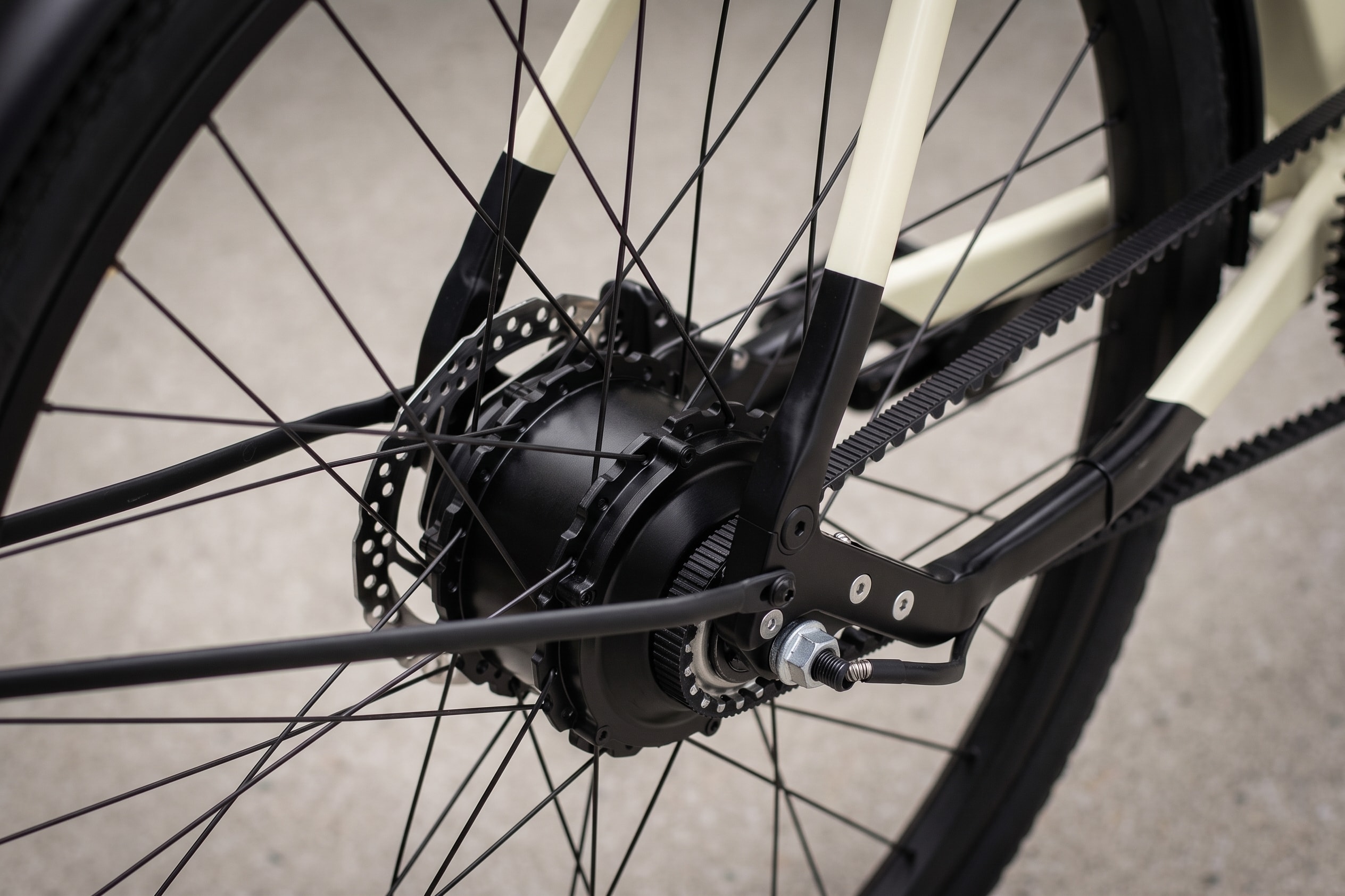
A mid-drive motor is mounted between the cranks and turns the chainring, so its power travels through the chain and the bike’s gears, the same path your legs use. A rear hub motor is built into the back wheel and turns the wheel directly, so the chain and gears only carry your effort. Both can run a normal derailleur and cassette. Think of a mid-drive like a car engine driving through a gearbox, and a rear hub like a motor fitted straight to the wheel.
Mid-drive
Pros. High torque, 85Nm or more on performance models. Uses the bike's gears, so it can drop to a low ratio for steep climbs. Weight sits low and central.
Cons. Motor power runs through the chain, cassette and chainring, so they wear faster and can result in poor shifting performance under load or a very quickly worn out small cog on the cassette. Usually costs more than a rear drive.
Rear hub
Pros. The motor sits apart from the drivetrain, so the chain and gears only carry your effort and last longer. Simpler and lighter, with a sealed motor inside the wheel.
Cons. Adds weight at the back wheel. Has traditionally felt less natural to pedal. Lower torque.