
The evidence, by area
All eBike guides

The health benefits of cycling

What riding does to you, measured.

Cycling is good for you, that much is uncontroversial. What’s more interesting is how good, and exactly where. The research is unusually clear on this, because cycling shows up in some of the largest health studies ever run, tracking hundreds of thousands of people over years.

This guide pulls that evidence together across five areas: fat loss and weight, muscle, cardiovascular health, cholesterol, and mental health. It sticks to numbers wherever there are numbers, names the studies behind them, and finishes with why an eBike makes all of it easier to actually do, by folding the exercise into a commute you were making anyway.

The physical case

Fat, muscle, heart and cholesterol, what the data shows.

01

Weight — fat loss and calories

As effective as the gym, without the gym.

The standout finding here comes from a University of Copenhagen randomised trial, published in the International Journal of Obesity in 2017. Researchers took 130 overweight, inactive adults and split them into groups: one cycled to work (averaging 14 km a day), two did structured gym sessions, and one made no change. After six months, the bike commuters had lost 4.2 kg of fat mass, statistically on par with the high-intensity gym group’s 4.5 kg, and well ahead of the moderate-intensity group’s 2.6 kg.

The point isn’t that cycling beats the gym. It’s that it matches it, while costing you almost no extra time, because the exercise is the commute. You’re not carving out an hour you don’t have; you’re replacing a drive or a train ride.

How many calories you burn depends on the effort. A rough guide, per hour of riding:

ActivityCalories / hourCalories / km
Walking ~265 ~53
Cycling — push bike ~560 ~28
Cycling — eBike, low assist ~440 ~22
Cycling — eBike, high assist ~260 ~13

The eBike numbers are the ones worth noticing. Even on high assist, an hour’s ride burns around 260 calories, roughly a croissant’s worth, for effort that doesn’t leave you drenched. Drop to low assist and that climbs to around 440, close to a push bike, while still taking the sting out of hills. You choose how hard you work by choosing the assist level.
02

Muscle — what cycling builds

A leg press, every pedal stroke.

Cycling isn’t just cardio. Every pedal stroke is a low-weight, high-repetition resistance movement, and over time that builds real muscle, especially in people who weren’t training before. A clinical cycling program measured an average 7% increase in quadriceps muscle volume, and the effect is most pronounced in untrained and older riders, whose legs respond to the steady resistance much like they would to light weights.

The load is spread across a chain of muscles. The quadriceps drive the downward push and do most of the work. The glutes fire at the top of the stroke, hardest when you climb or stand. The hamstrings draw the pedal back and up, and the calves transfer all of it into the pedal. Less obviously, your core works continuously to keep your hips stable, and your arms and shoulders engage to steer, brake and hold the bars.

For everyday riding, this builds lean, fatigue-resistant Type I muscle rather than bulk, the dense, enduring leg strength distance riders are known for. You won’t get bigger so much as stronger and more capable, which is exactly what most people are after.

03

The heart — risk and longevity

The single biggest reason to ride.

This is where the evidence is strongest. A landmark University of Glasgow study, published in the BMJ in 2017, tracked 264,337 UK commuters over five years. Those who cycled to work had a 35% lower risk of developing cardiovascular disease and a 41% lower risk of dying early from any cause, compared with people who drove or took public transport. They also had a 45% lower risk of developing cancer. Few everyday habits move the numbers that far.

35% Lower risk of developing cardiovascular disease
41% Lower risk of dying early from any cause
45% Lower risk of developing cancer
264,337 UK commuters tracked over five years (BMJ, 2017)

The mechanisms are well understood. Regular cycling acts like a natural blood-pressure treatment, consistent riding over a few months can lower systolic pressure by several points, enough to shift some people out of the hypertensive range without medication. And it keeps you in the right intensity zone almost the whole time: research on eBike riders finds they spend the large majority of their riding time in the aerobic heart-rate zone that improves cardiovascular fitness, working, but not straining.

That last point matters for eBikes specifically. The worry that assistance means you’re not getting a workout doesn’t hold up: assisted riders stay in the cardio zone for most of the ride, because the motor smooths out the spikes, steep hills, hard starts, rather than removing the effort.

Cholesterol.

Cycling also reshapes how your body handles cholesterol. Pedalling stimulates enzymes that pull LDL, the harmful cholesterol, out of the bloodstream, while consistently raising HDL, the protective kind that clears fatty deposits from artery walls. Exercise even changes the physical form of LDL, turning small dense particles that lodge in artery walls into larger ones that pass through harmlessly.

The threshold is lower than you'd think.

A decade-long study in the Journal of the American Heart Association found regular bike commuters had around a 20% lower risk of developing high cholesterol than passive commuters. The American Heart Association points to 150 minutes of moderate aerobic exercise a week, about 15 minutes of riding each way, five days a week.

The mental case

The benefits that don't show up on a scale, and the eBike angle that makes it all easier.

04

The mind — stress, mood and sleep

The commute that lowers the stress it used to cause.

The mental-health evidence is as strong as the physical. A 2024 University of Edinburgh study, published in the International Journal of Epidemiology, analysed nearly 380,000 commuters and found that those who cycled to work were noticeably less likely to be prescribed antidepressants or anti-anxiety medication, 9% of cyclists had such a prescription over the following five years, against 14% of non-cyclists, an estimated 15% reduction. Because of how the study was designed, the researchers describe the link as causal, not just correlation.

The reasons are physiological. Fifteen to twenty minutes of steady pedalling helps flush cortisol, the stress hormone, and replaces it with endorphins and serotonin. The rhythmic, repetitive motion works as a kind of active meditation, interrupting the looping, ruminating thoughts that drive anxiety. And riding outdoors in morning light helps regulate your body clock, which improves sleep, which underpins mental health more broadly.

There’s a quiet irony in it: for a lot of people the commute is the most stressful part of the day, and turning it into a ride flips that on its head, the trip becomes the part that lowers stress rather than adding to it.

05

The eBike angle — getting the benefits

The health benefits you'll actually keep up.

The best exercise is the one you keep doing. Most of the studies above measured commuters, not weekend warriors, because a daily ride built into a trip you were making anyway is far more sustainable than a gym habit you have to schedule, travel to and defend against a busy week.

This is exactly where an eBike earns its place. The assistance removes the things that stop people cycling to work, arriving sweaty, dreading the hills, the long slog home after a tiring day, while you still pedal the whole way and stay in the cardio zone. You get most of the health return without the barriers, and you keep doing it. On the days you want a harder workout, drop the assist and burn closer to push-bike numbers; on the days you just want to arrive fresh, turn it up. The exercise scales to how you feel, which is a large part of why people stick with it.

Want to explore this further? Check out this Auren guide. Complete Commuter eBike Guide
06

Frequently asked

The questions readers ask most.

Is cycling good for weight loss?

Yes. A University of Copenhagen trial found overweight adults who cycled to work lost 4.2 kg of fat over six months, statistically on par with high-intensity gym training. A push-bike hour burns roughly 560 calories and an eBike hour 260 to 440 depending on assist, and because it replaces a commute, it costs almost no extra time.

How many calories does cycling burn?

Roughly 560 calories an hour on a push bike, and about 260 to 440 on an eBike depending on how much assist you use, low assist burns more, high assist less. You effectively choose the calorie burn by choosing the assist level, which is why an eBike can be either a gentle ride or a real workout.

Does cycling build muscle?

It builds lean, enduring leg strength rather than bulk. A structured cycling program measured around a 7% increase in quadriceps volume, with the biggest gains in untrained and older riders. It mainly works the quads, glutes, hamstrings and calves, with the core and upper body stabilising throughout.

What are the cardiovascular benefits of cycling?

They’re substantial. A Glasgow study of 264,337 commuters in the BMJ found cycling to work was linked to a 35% lower risk of heart disease and a 41% lower risk of early death from any cause. Regular riding also lowers blood pressure and keeps you in the aerobic heart-rate zone for most of a ride, including on an eBike.

Does cycling lower cholesterol?

Yes. Pedalling clears LDL (bad cholesterol) from the blood and raises HDL (the protective kind). A decade-long study in the Journal of the American Heart Association found regular bike commuters had around a 20% lower risk of developing high cholesterol. About 150 minutes of moderate riding a week, 15 minutes each way, five days, is the threshold that matters.

Putting it together

The healthiest habit is the one you keep.

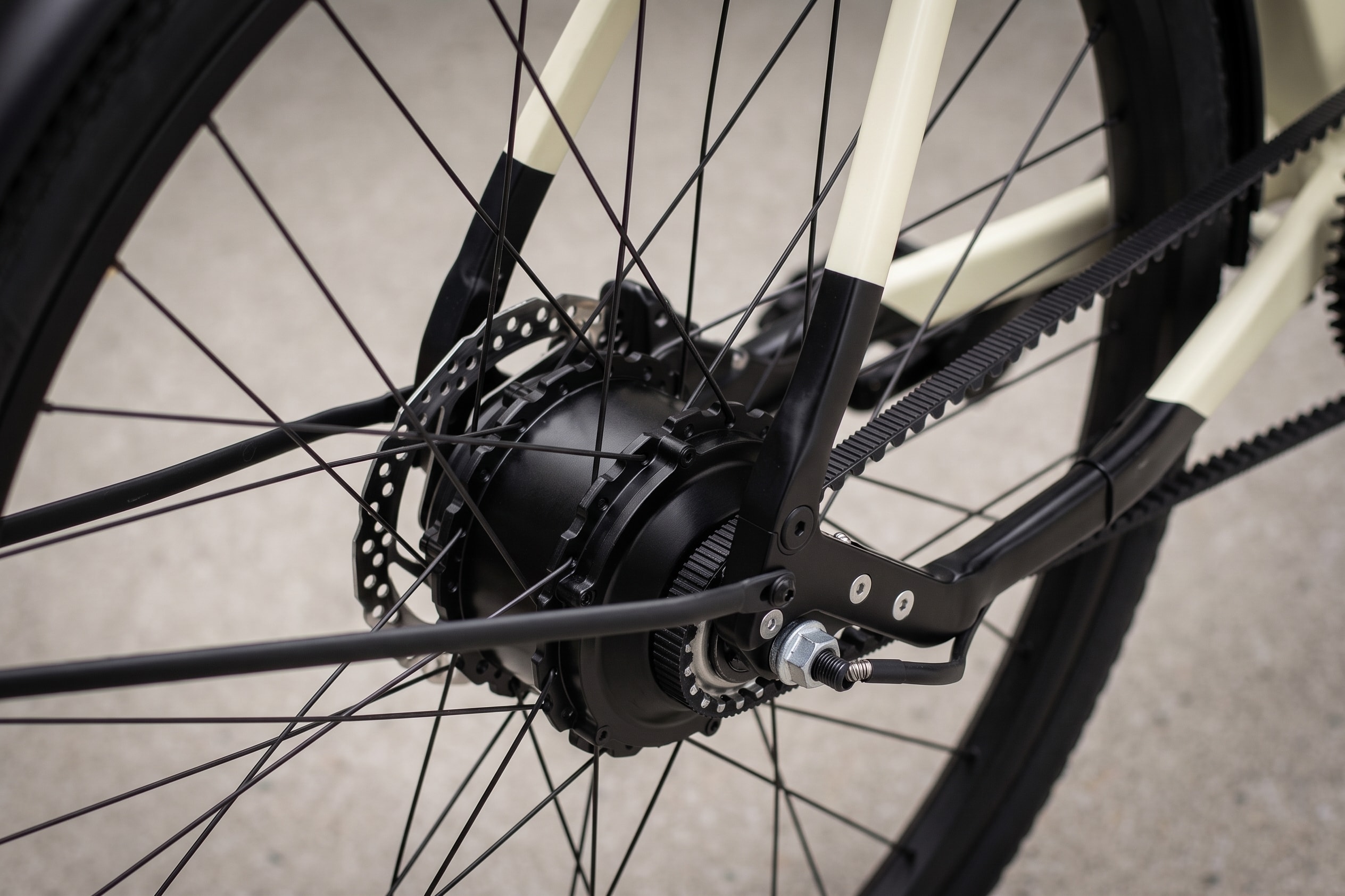
The evidence lands in one place: cycling does real, measurable good, to your weight, your muscles, your heart, your cholesterol and your mind, and a commute is the most reliable way to get it, because it doesn't ask for time you don't have. The catch is sticking with it, and that comes down to how easy the bike makes the ride. The Auren EV5 is built for exactly that: automatic gearing so there's nothing to think about, a belt drive and sealed components so there's nothing to maintain, and assist levels you can dial up to arrive fresh or down for a harder workout.

Automatic gearing · Carbon belt drive · $4,400 direct

0